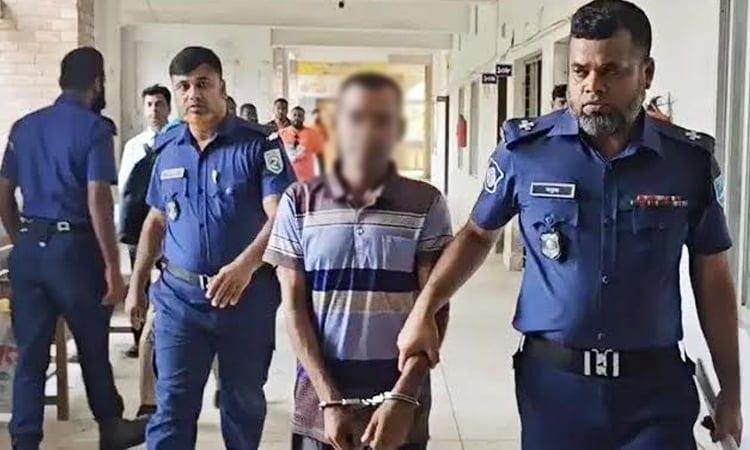
A court in Jamalpur has convicted 14 individuals in connection with a 2016 double murder, sentencing seven to death and seven to life imprisonment. Additional Sessions Judge Muhammad Nazam Uddin also imposed a fine of Tk 50,000 on each convict. The case stems from the murder of Swapon Miah, 16, and his uncle Mahar Ali, 19, who were lured out of their home under the pretext of attending a music programme and subsequently killed.
Background of the Case
According to the prosecution, the murders were motivated by previous enmity. The victims, Swapon Miah and Mahar Ali, were called out of their home in Gajaria village on the night of May 16, 2016, and went missing. Their bodies were discovered three days later in a jute field in Kukurmari village of Madarganj upazila. Md Jahangir Alam, the father of Swapon and elder brother of Mahar Ali, filed a case with Madarganj Police Station.
The court examined 18 prosecution witnesses and relevant documents before finding the accused guilty. The convicted individuals include Md Sakhawat, Md Sohel, Md Al Amin, Md Saddam, Md Uzzal, Ontar, and Fayjur, who were sentenced to death, and Md Chan Mia, Md Jiar, Md Shah Alom, Md Kawsar, Md Rifat, Md Sumon, and Md Mustofa, who received life sentences.
Legal and Social Implications
This case highlights the severity with which the Bangladeshi judicial system treats premeditated murder, especially when it involves multiple victims. The imposition of both death sentences and life imprisonment underscores the gravity of the crime and the court's intent to deliver justice to the victims' families.
The fine of Tk 50,000 on each convict serves as an additional punitive measure, although the primary focus remains on the severe sentences handed out. This case may also serve as a deterrent to potential criminals, illustrating the consequences of engaging in violent acts driven by enmity.
The conviction and sentencing in this case bring a measure of closure to the victims' families, who have waited years for justice. It also reflects the ongoing efforts of law enforcement and the judiciary to address and punish criminal activities in the region.