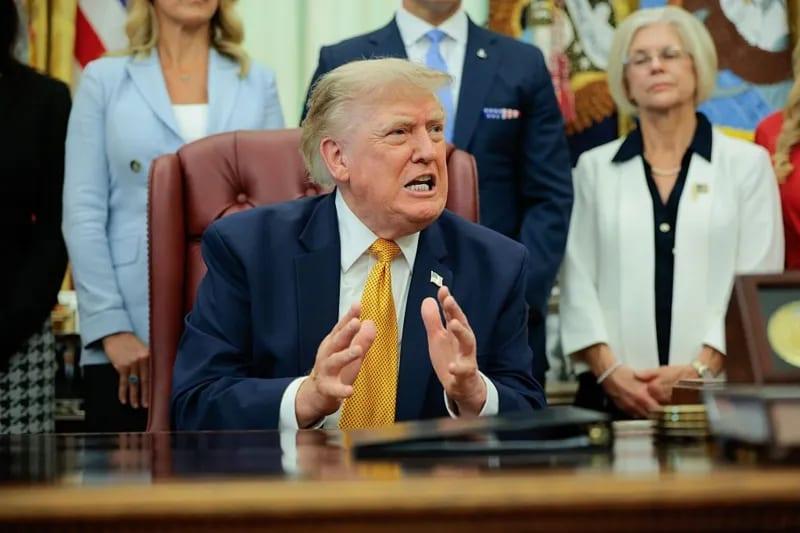
The United States and Canada have signaled that they are close to finalizing a comprehensive trade deal, following President Donald Trump's decision to pause the implementation of a new round of tariffs. Trump confirmed that a deal with Canada is'subject to finalization of documents,' while Canadian Prime Minister Mark Carney expressed cautious optimism about the progress towards an agreement.
The proposed tariffs, initially set at 50 percent on select Canadian goods, were due to take effect but have been delayed by three days as negotiations continue. Bloomberg News reported that the tentative trade pact would reduce US tariffs on some Canadian steel and aluminum exports to 25 percent, though details are not yet final.
Trump’s tariffs on autos, steel, aluminum, and forest products have had a significant impact on Canada’s economy. Securing relief from these duties has been a key priority for Ottawa throughout the negotiations. Carney praised Canada-US Trade Minister Dominic LeBlanc and Trump’s top negotiator Jamieson Greer for their'significant progress' in the talks.
LeBlanc and Greer have been working collaboratively towards a finalized agreement. Greer, the US trade representative, expressed confidence that the pact will 'strengthen the North American economy.' Trump highlighted that the deal would benefit US farmers, who have faced restricted access to Canadian markets.
The White House had accused Canada of 'discriminatory treatment' against US alcohol, automobile, and dairy products. Carney stated that the deal secures 'the best terms in each of Canada’s most important strategic sectors and provides greater certainty about our future trading relationship.' Canada had previously sought to renew the existing North American Free Trade Agreement, but Trump demanded substantial changes.
The intense negotiations over the revised agreement reflect the economic interdependence between the two nations. A successful trade deal would not only stabilize bilateral relations but also have broader implications for global trade dynamics. For Bangladesh, which relies on both the US and Canadian markets for exports, a stable North American trade environment could enhance opportunities for Bangladeshi products in these markets.