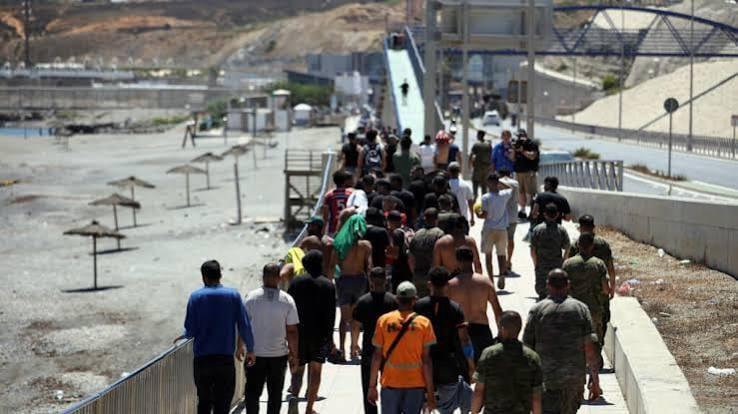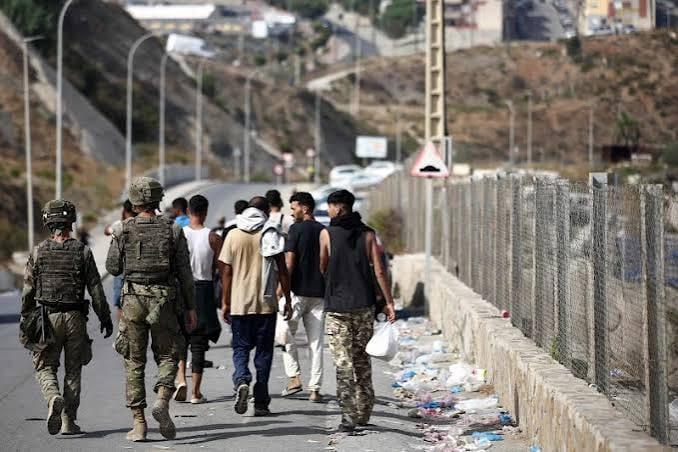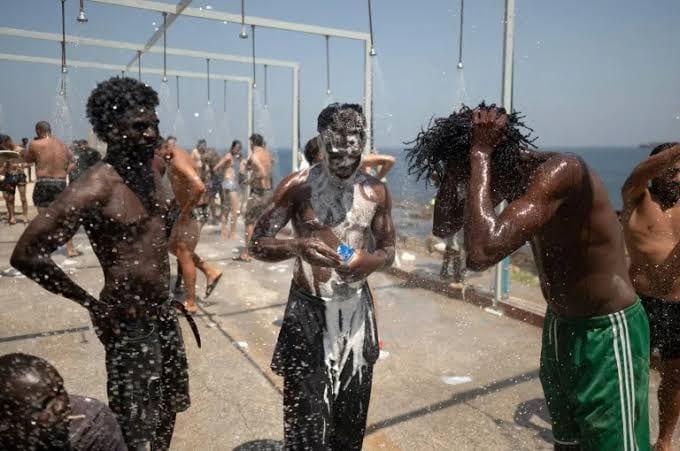
The Spanish government has announced the creation of shelters for 1,800 migrants in Ceuta in a bid to relieve the humanitarian crisis there following last month's influx from Morocco. Some 72,000 migrants breached the border in an unprecedented and deadly rush into the north African territory on July 30-31, with 70,000 having since returned to Morocco, according to Spanish government figures. But the thousands who remain—including unaccompanied children who cannot be summarily deported—are struggling to access food, water, shelter, and sanitation while the tiny city's resources are overwhelmed. Many have spent the past three weeks sleeping on the streets or on the beach, with NGOs warning that women and girls are particularly vulnerable.
The migration ministry said the two new shelters were "temporary reception facilities that will be expanded progressively as the adaptation work on the other planned spaces is completed". The priority of the "voluntary" transfer was to offer "an alternative accommodation and reception space so that they (the migrants) no longer have to spend the night on the streets or on the beach," the ministry said.
Locals have complained about insecurity and hygiene problems linked to the homeless migrants roaming the streets, accusing the government of neglecting Ceuta. The migrants' future has sparked a political battle between Spain's leftist central government and regions governed by the main conservative Popular Party (PP) and far-right Vox, which resist taking in unaccompanied children under existing legal provisions. The government aims to transfer 500 girls to mainland Spain, but the PP has demanded the expulsion of all the remaining migrants.
"In Spain, mass deportations of minors are illegal," secretary of state for children Ruben Perez Correa responded during an interview with Cadena SER radio on Thursday. The unaccompanied girls in Ceuta—some as young as 10 or 11 years old—come from "very complex family situations" and "require specialised care," he said.
The humanitarian crisis in Ceuta underscores the broader challenges faced by Spain and other European countries in managing migration. The situation highlights the need for comprehensive policies that address both the immediate needs of migrants and the long-term integration of those who remain. As the crisis continues, the Spanish government faces pressure to find sustainable solutions that balance humanitarian concerns with political and social realities.