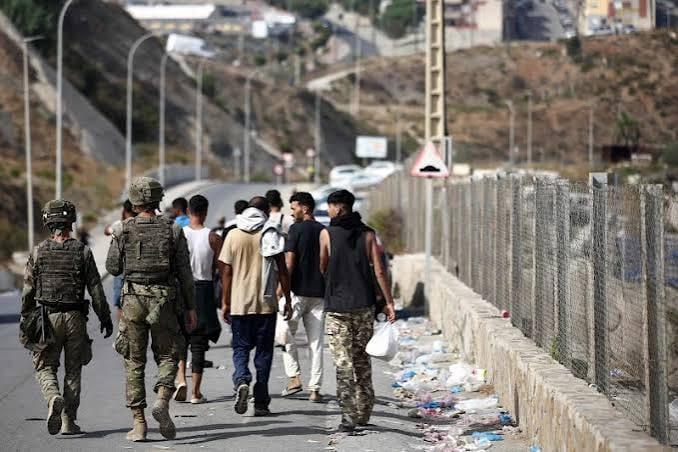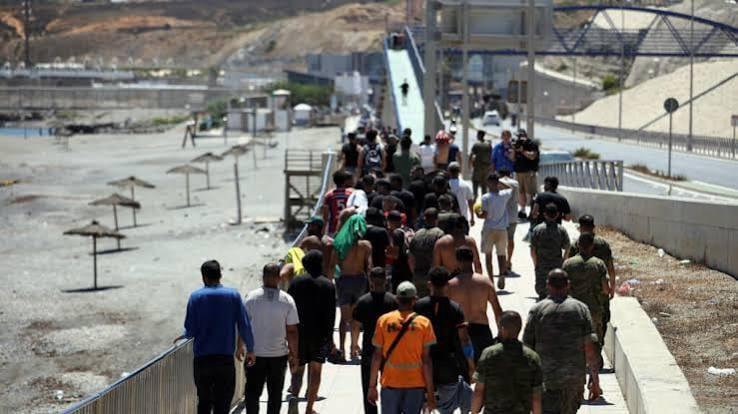
Ceuta's leader, Juan Jesus Vivas, has declared the number of unaccompanied child migrants in the Spanish territory 'unsustainable' and appealed for government aid. Approximately 2,500 migrants remain in Ceuta after a recent influx, including hundreds of minors facing dire conditions with limited access to basic necessities. Authorities are currently caring for 1,100 youngsters, far exceeding the theoretical capacity of 90. Vivas warned of 'a high risk for order and public security' as reception centers are overwhelmed. The Spanish government has announced 25 million euros in emergency funding for Ceuta but redistribution of the children may face resistance from certain regions.
The influx of migrants into Ceuta, a Spanish territory on the north African coast, has strained local resources. Spain reports that 70,000 of the 72,000 migrants who entered Ceuta from Morocco have returned. However, the remaining 2,500 include many unaccompanied minors who are struggling to find food, water, shelter, and sanitation. Ceuta's leader has contacted Prime Minister Pedro Sanchez's office to warn of the crisis, but the government maintains it received no prior warning of the scale of the incident.
The situation in Ceuta highlights the broader challenges Europe faces with migration. The deadly influx has sparked tensions with EU partners who advocate for a stricter immigration policy. Meanwhile, the Spanish government's top official in Ceuta, Miguel Angel Perez, has identified the unaccompanied minors as a priority and a significant concern. The charity Save the Children estimates around 1,000 'unprotected' minors are among the migrants still in Ceuta.
Efforts to redistribute the unaccompanied minors across Spain may be complicated by political resistance. Regions governed by the conservative Popular Party (PP) and the far-right Vox party are likely to resist any redistribution under existing legal provisions. Socialist deputy prime minister Carlos Cuerpo has insisted that all regions must comply with the law. The crisis in Ceuta underscores the urgent need for a coordinated response to the migration challenges facing Europe.