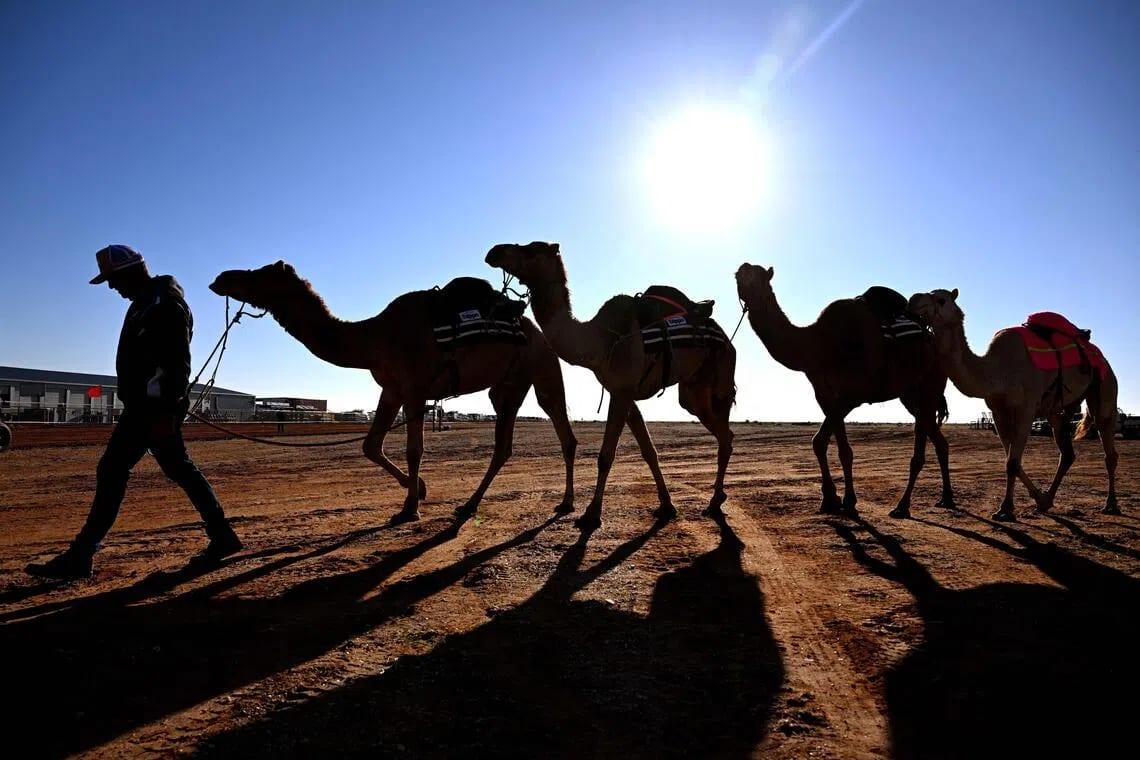
Far from their origins in the Arabian desert, hundreds of thousands of camels now roam the outback of Australia. Originally imported by British colonists in the 19th century for transport, these animals were set free when cars rendered them obsolete. Today, estimates suggest the camel population in Australia ranges from 300,000 to over a million.
While many of these camels are feral, causing issues such as competing with livestock for food and damaging Indigenous cultural sites, domesticated camels have found new purposes. They are used in wild races, as an alternative milk source, and even in the production of unique beers.
On the Humpalicious farm in Robe, South Australia, owner Warwick Hill extols the benefits of his camels. Hill sells camel milk for Aus$20 ($14) a litre, highlighting its health benefits, especially for those with allergies. He believes it is superior to mainstream dairy options due to its closeness to human milk.
Across town, the Robe Town Brewery utilizes the camels in an unconventional way. The farm's camels are fed grain left over from the brewing process, and their dung is used to smoke the malt for the brewery's "Holy Smokes" porter, a rich, dark, and smoky beer.
Further north, in the remote town of Marree, camels are transformed into racers. The annual Marree Camel Cup attracts hundreds of spectators, with participants like Joanne Bell and Kyrraley Woodhouse finding joy and excitement in camel racing. The event showcases the unique bond between humans and these resilient animals.