The historic Dholeshwar Hanafia Jame Mosque in South Keraniganj has stood as a witness to history for nearly 150 years, preserving the religious and architectural heritage of the region. This mosque, located in Dholeshwar village under Konda union of Keraniganj, is a symbol of history and tradition, serving as a source of pride for local residents and worshippers.
Although the mosque has undergone several rounds of renovation over the years, its original design and architectural character have largely been preserved. The construction works of the mosque began in 1868, under the initiative of Daroga Aminuddin Ahmad. As the principal initiator of its construction, the mosque was locally known as the “Daroga Mosque.”
Architectural Significance
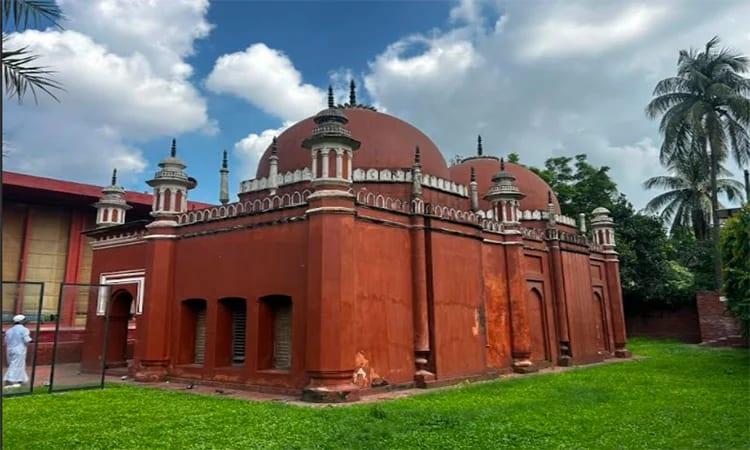
Built with red bricks, the Hanafia Jame Mosque reflects the traditional architectural style of historic mosques in Bengal. Its most prominent feature is a single large, elevated dome surrounded by smaller minaret-like structures. The entrance features arched doors decorated with intricate designs, while carved ornamental patterns can also be seen on the front wall and around the entrance.
The interior is spacious and high-ceilinged, allowing sufficient circulation of light and air. The mosque measures approximately 43.5 feet in length and 27 feet in width, while its total height, including the dome, is about 18 feet. The mosque is surrounded by greenery, including grass and small trees, and a nearby water body provides a striking reflection of the historic structure.
International Recognition and Preservation Efforts
The mosque received international recognition for its architectural and historical significance. In December 2021, it received an Award of Merit under UNESCO’s Asia-Pacific Awards for Cultural Heritage Conservation. On December 16 of the same year, it also received the Abdul Latif Fawzan International Award for Mosque Architecture.
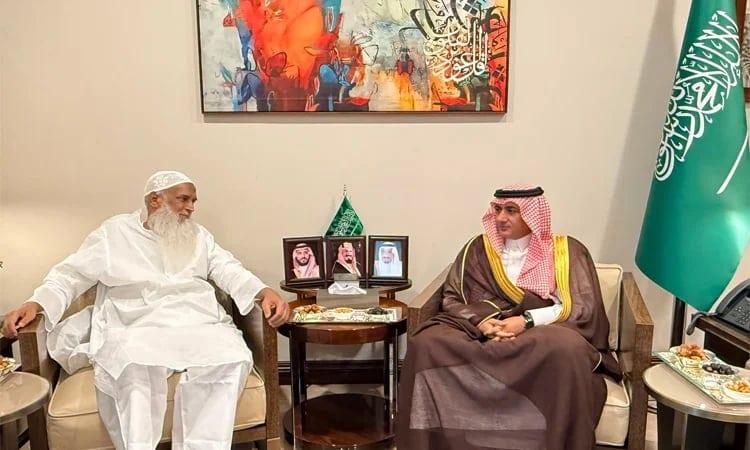
On March 17, 2023, then Saudi Ambassador to Bangladesh Issa bin Yousef bin Al-Duhailan visited the historic mosque. Mufti Abdul Kabir Firozi, imam of the mosque, emphasized that preserving the historic character and red-brick structure had been the top priority during renovation. The mosque’s international recognition has further increased interest among domestic and foreign visitors.
Local social worker Ayat Ullah Chowdhury Saimon called for government initiatives to ensure the mosque’s long-term preservation, suggesting it be officially listed as a protected archaeological monument. Afroza Khanam Mita, regional director of the Department of Archaeology for the Dhaka and Mymensingh divisions, explained the process for having an old structure included on the list of protected archaeological monuments.