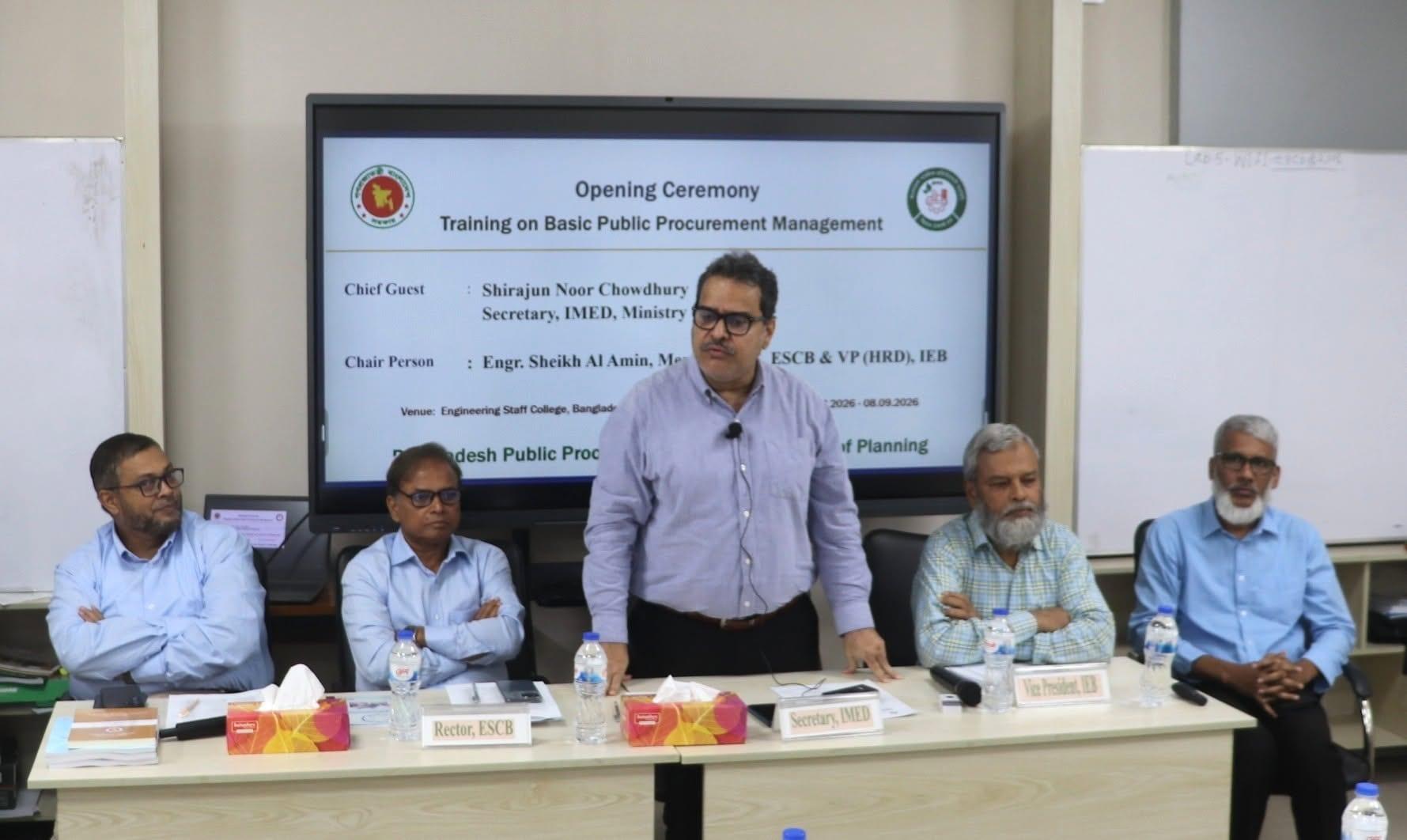
The Bangladesh Public Procurement Authority (BPPA) has launched the second batch of its four-week (21-day) non-residential Basic Public Procurement Management (PPM) training programme at the Engineering Staff College Bangladesh (ESCB) at Ramna in Dhaka. The training began yesterday with 34 officers, including six women, from various government offices participating in the programme. The course is scheduled to conclude on September 8, 2026, according to a press release.
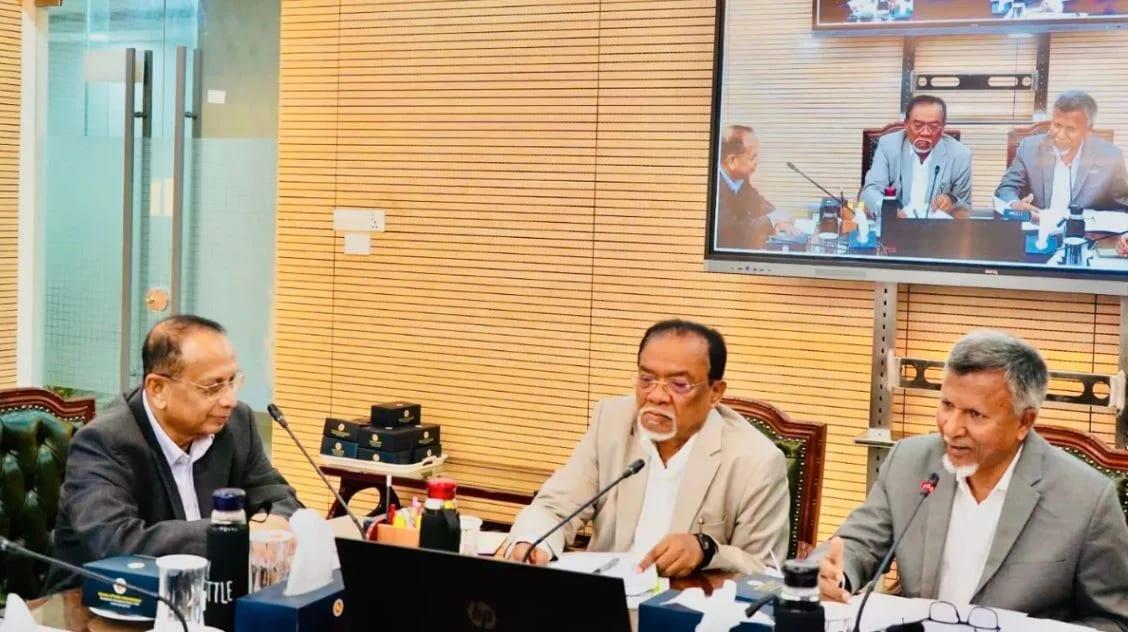
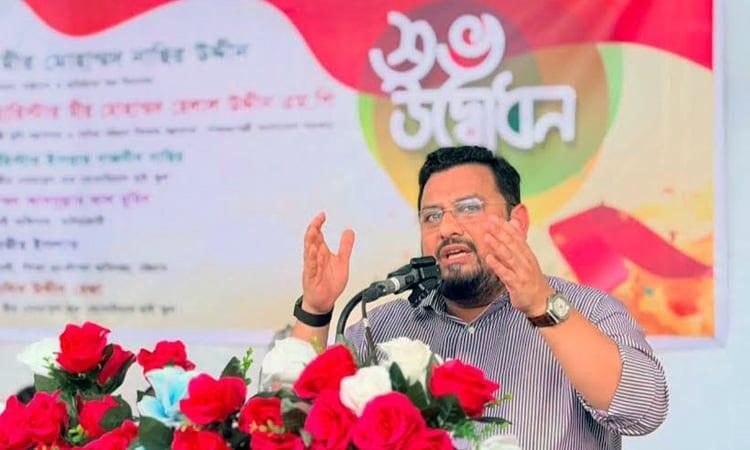
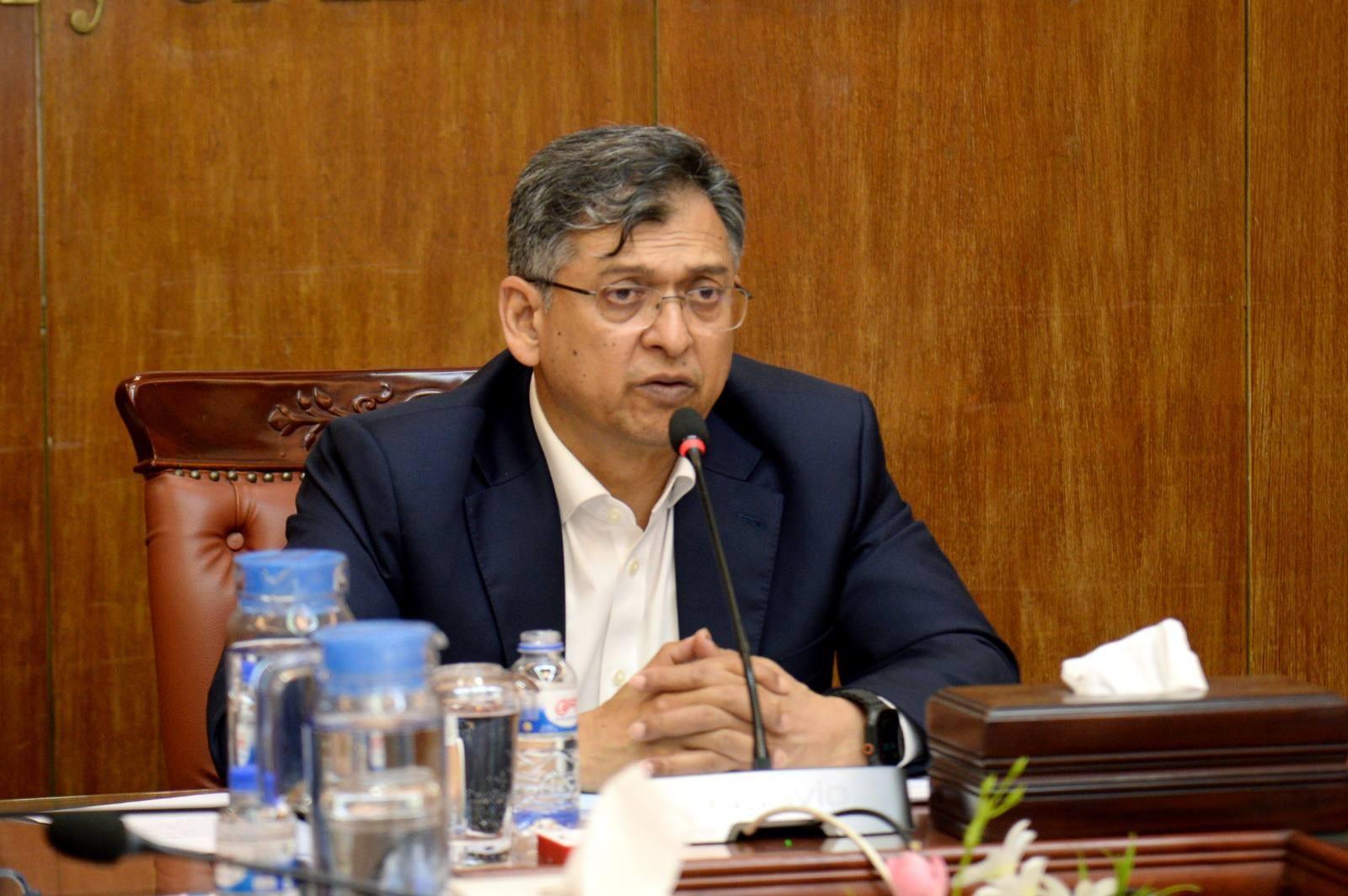
Secretary, Implementation Monitoring and Evaluation Division (IMED), Ministry of Planning, Shirajun Noor Chowdhury attended the inaugural session as the Chief Guest. BPPA Director (Training) Shaikh Muhammad Refat Ali was present, along with BPPA Director and national procurement trainer Shah Eyamin-Ul Islam, who served as the Resource Person. Senior officials from ESCB and IEB were also present during the inauguration.
During his speech, the IMED Secretary emphasized the importance of PPM training, stating that such professional training in public procurement is essential for government officials to enhance their efficiency and effectiveness in procurement processes. He highlighted the need to reduce unnecessary delays and additional costs in public procurement, noting that project costs often increase due to delays in procurement and land acquisition.
The Secretary stressed that the professionalization of public procurement has become increasingly important and that such training programmes would help government officials strengthen their skills and complete procurement activities in a timely and efficient manner. Under the ongoing World Bank-supported Procurement Modernization to Improve Public Service Delivery (PMIPSD) Project, BPPA plans to conduct 22 non-residential and five residential four-week PPM training courses during the 2026-27 fiscal year.
The first residential four-week training course under the programme is scheduled to begin on August 22, 2026, at the ESCB campus in Gazaria, Munshiganj. These training programmes are crucial for enhancing the capabilities of government officials in managing public procurement, thereby contributing to more efficient and cost-effective project implementation in Bangladesh.