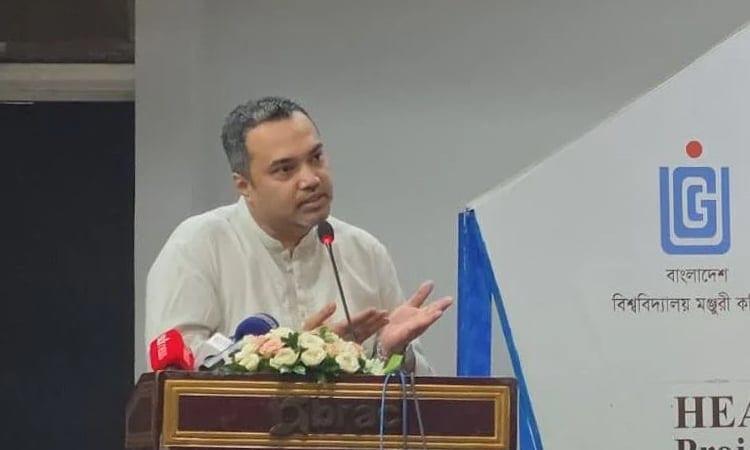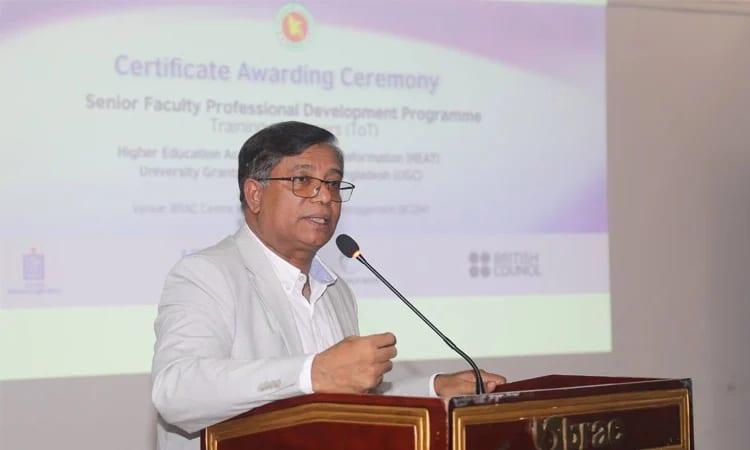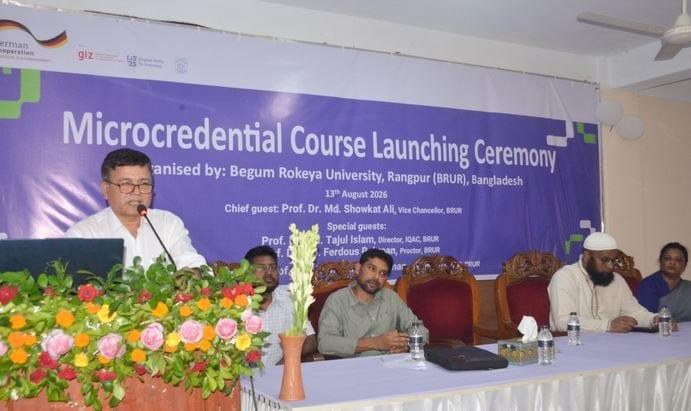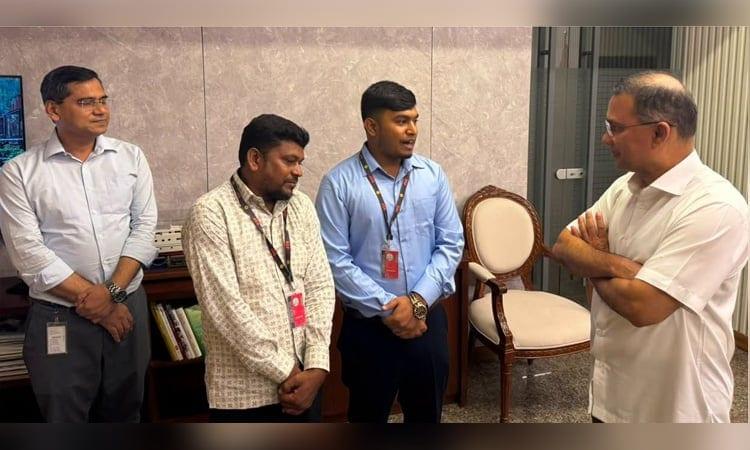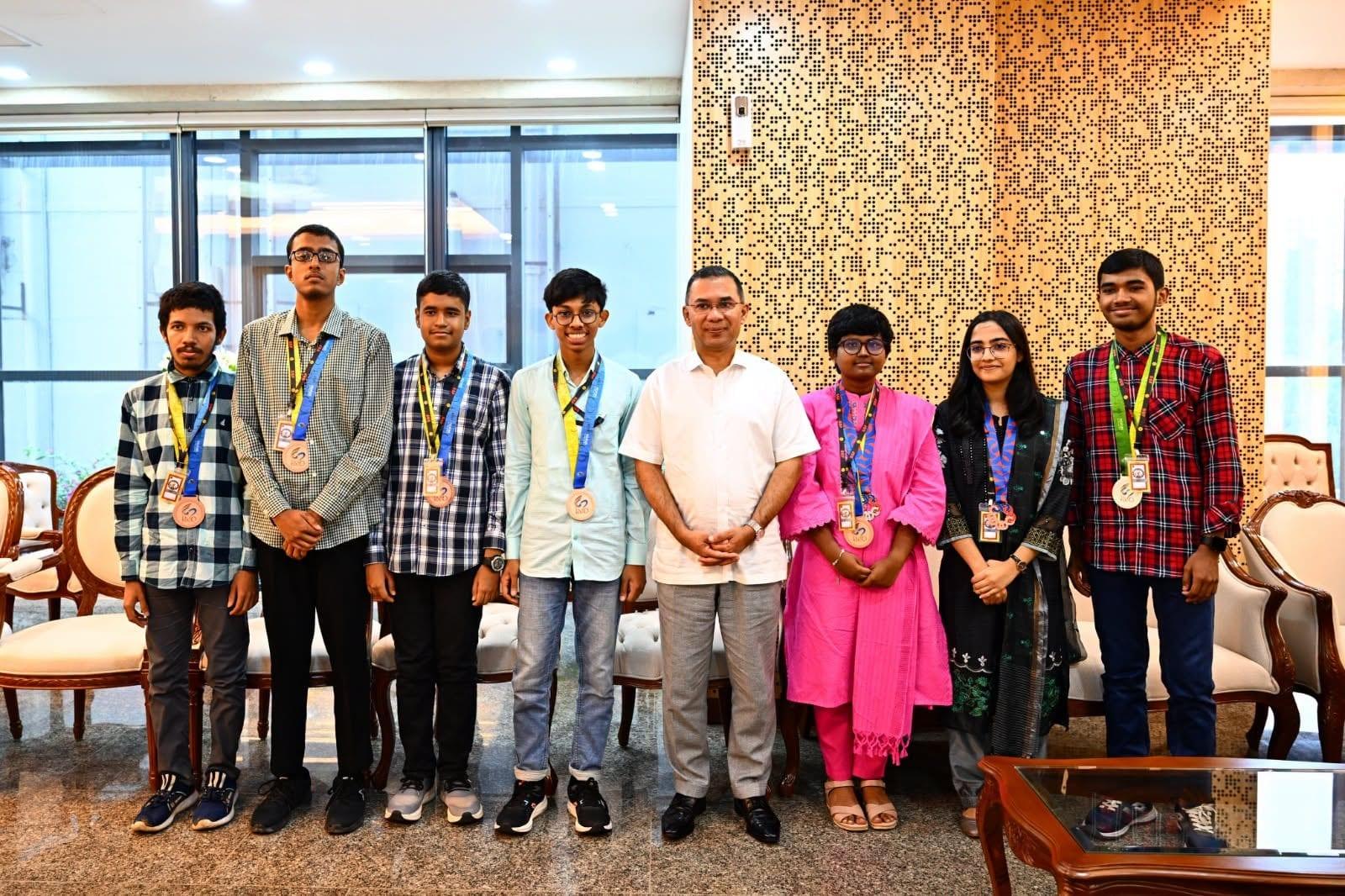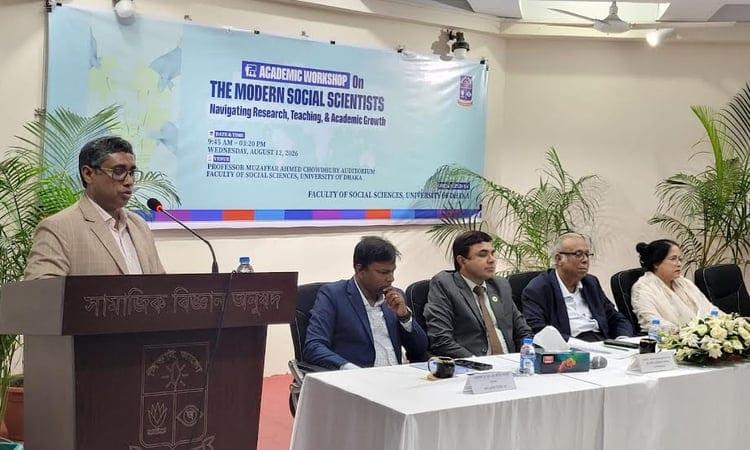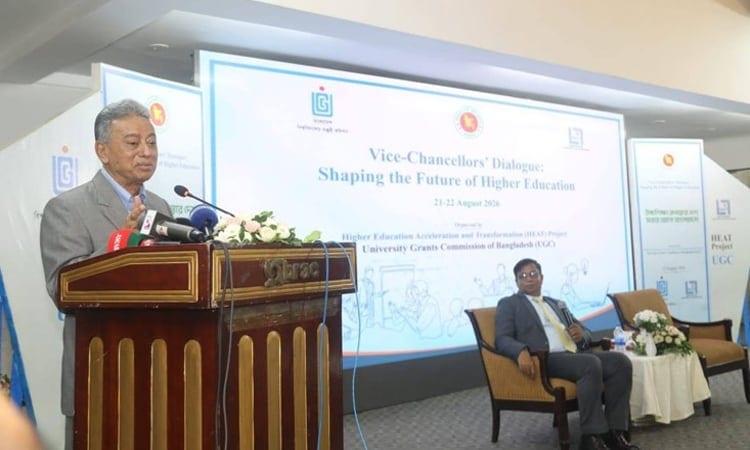
At the 'Vice-Chancellors' Dialogue: Shaping the Future of Higher Education', Finance and Planning Minister Amir Khosru Mahmud Chowdhury urged a shift in higher education towards employment and entrepreneurship. Speaking at the two-day national policy dialogue organised under the Higher Education Acceleration and Transformation (HEAT) Project of the University Grants Commission (UGC) at BRAC CDM in Savar, Khosru called for aligning higher education subjects and curricula with the country’s economic needs and labour market realities. He stressed that the goal of higher education should not be limited to obtaining certificates but should also prepare students for employment and entrepreneurship.
Khosru highlighted the importance of stronger university-industry collaboration, noting that such links are common in many countries and should be leveraged in Bangladesh. He questioned the current lack of industry-university interaction and urged universities to identify reasons behind weak linkages and mismatches between education and labour market requirements. The minister also underscored the impact of international and national rankings of higher education institutions on employment opportunities, global recognition, and the overall image of the country.
The minister called for research to be a fundamental component of higher education, urging universities to conduct research that addresses real-life problems faced by industries and businesses. He encouraged the private sector to finance university research and commercially utilise research findings, stressing that research should contribute to national development and people’s welfare. Khosru questioned the academic structure of newly established universities, suggesting that their faculties and academic programmes should be selected based on specific educational, regional, and employment needs.
Khosru said he would request the UGC to formulate appropriate guidelines on the faculties and subjects to be introduced at newly established universities, taking into account regional needs, priority sectors, and employment opportunities. Referring to government budget allocation, he said education had received the highest allocation despite fiscal constraints, and the government remained committed to increasing investment in education, with a target of raising education expenditure to five percent of GDP as the economy grows.
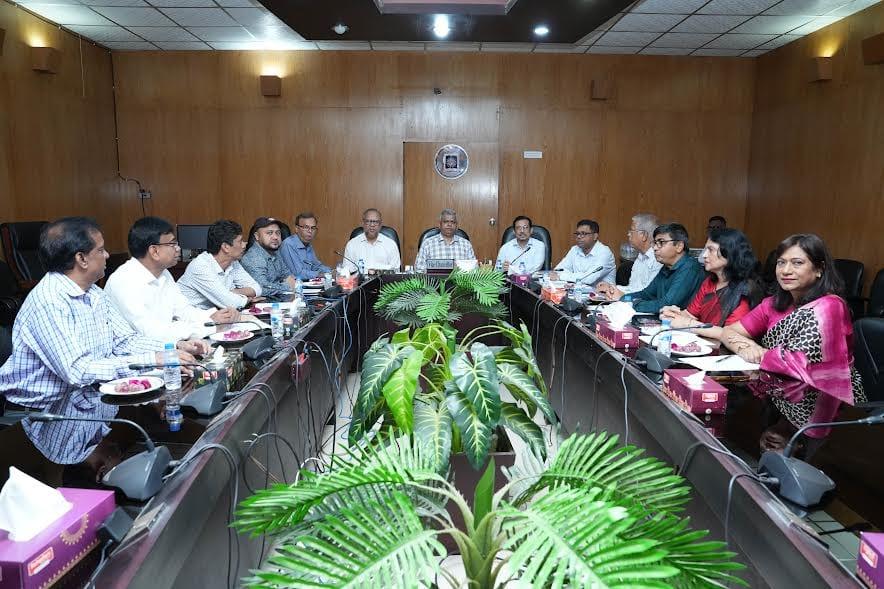
Regarding private universities, the minister said the government had addressed the tax-related issue concerning the institutions and urged them to make their compliance with government requirements visible through annual reports. He said transparent reporting of university activities, including research expenditure and outcomes, would contribute to improving institutions’ reputation and rankings. The two-day dialogue brought together vice-chancellors of around 65 public and private universities, policymakers, academics, and experts to discuss strategic leadership and governance, quality teaching and assessment, research and innovation, university-industry collaboration, artificial intelligence, and digital transformation.