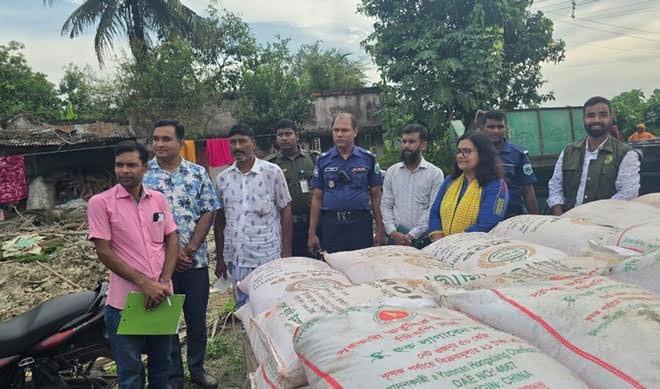
In a significant operation, a mobile court seized 140 sacks of illegally hoarded fertilizer in the Kanaidanga area of Godagari Upazila in Rajshahi district. The operation, led by Upazila Nirbahi Officer and Executive Magistrate Israt Jahan, took place on Thursday. The raid targeted a cowshed belonging to Nasiruddin, son of late Mohsin Ali's cousin late Khadimul Islam Socket, following intelligence about illegal fertilizer hoarding.
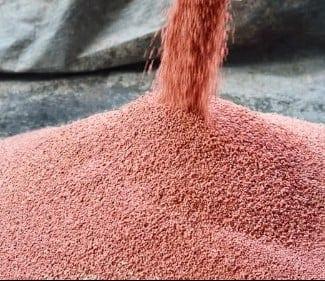
During the raid, officials recovered and seized 90 sacks of MOP (Muriate of Potash) and 50 sacks of DAP (Diammonium Phosphate) fertilizer from the cowshed. The mobile court fined Nasiruddin Tk 50,000 for illegally hoarding fertilizer and took a bond from him as a preventive measure.
The Upazila administration emphasized that such drives will continue to combat the illegal hoarding of fertilizer, which is allocated for farmers. Illegal hoarding creates artificial crises and leads to the sale of fertilizers at excessive prices, severely impacting farmers who rely on these essential agricultural inputs.
Fertilizer is a critical component in agriculture, especially in a country like Bangladesh where farming is a mainstay of the economy. The illegal hoarding of fertilizers not only disrupts the supply chain but also inflates prices, making it difficult for small-scale farmers to afford necessary inputs for their crops.
The government has been taking various measures to ensure the fair distribution of fertilizers. These include setting up mobile courts, conducting regular raids, and imposing strict penalties on hoarders. The aim is to maintain a stable supply of fertilizers at reasonable prices, ensuring that farmers have access to the resources they need to produce food.
This recent seizure in Godagari Upazila is a clear message that the authorities are committed to tackling the issue of illegal fertilizer hoarding. It also highlights the importance of community vigilance and cooperation in reporting such illegal activities to the authorities.
For Bangladesh, where agriculture is a vital sector contributing significantly to the GDP and employing a large portion of the population, ensuring the fair and legal distribution of fertilizers is crucial. It not only supports the livelihood of farmers but also ensures food security for the nation.