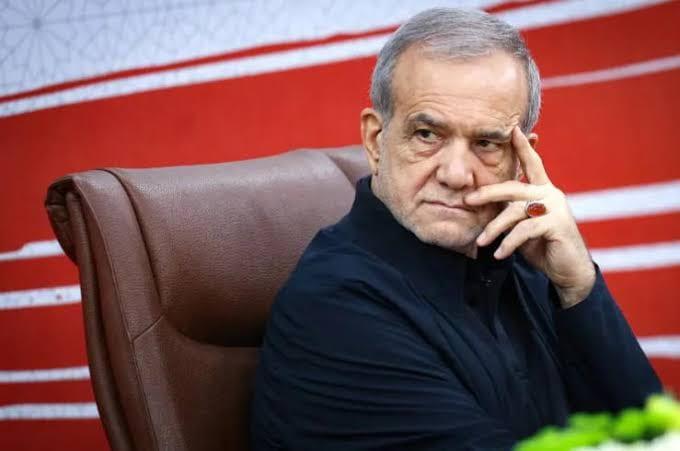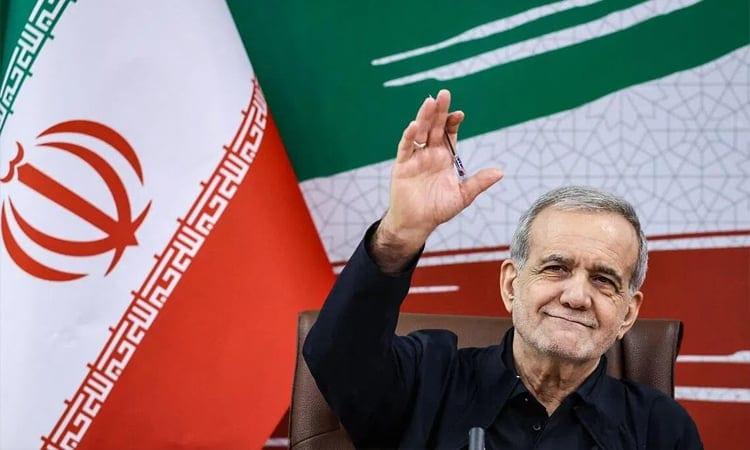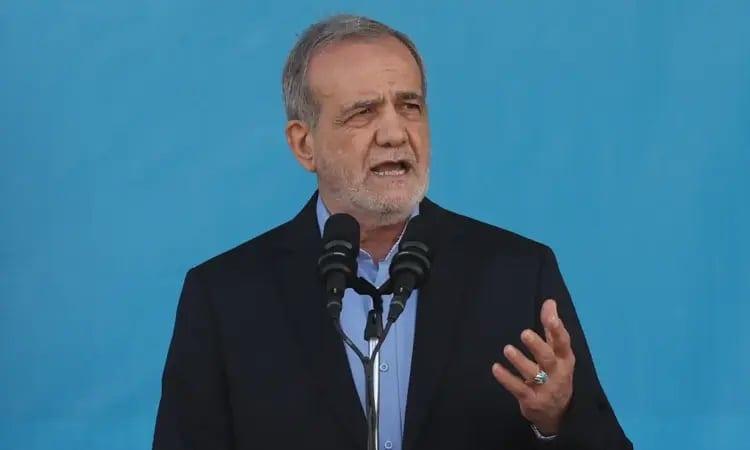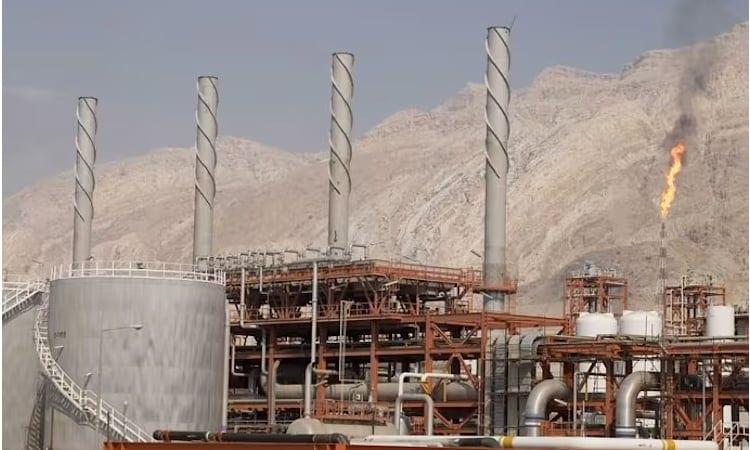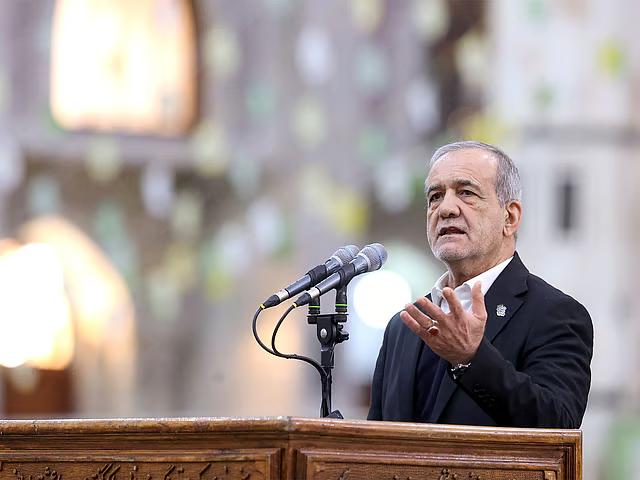
Iranian President Masoud Pezeshkian acknowledged on Sunday that his country's citizens face'many problems', following the United States' announcement of a new wave of sanctions aimed at further isolating Iran's economy. 'I understand we have many problems in society right now. We are trying to prevent these as much as we can,' Pezeshkian said in a speech broadcast on state television.
The US has vowed to bring about the 'collapse' of the Iranian regime through this newly announced sanctions campaign, nearly six months after the start of their war. Pezeshkian responded by stating that, thanks to US President Donald Trump, Iran was 'in a full-scale economic, military and security war'. 'He says he is imposing the most crushing and terrifying sanctions on Iran,' Pezeshkian added.
The Iranian government has faced several waves of mass protest in recent years, often triggered by economic hardships. Inflation and exchange rate swings have led to declining purchasing power, sparking widespread discontent. At the end of December last year, a protest movement initially sparked by the rising cost of living turned into mass demonstrations denouncing those in power.
Authorities reported more than 3,000 deaths during the unrest, accusing the United States and Israel of orchestrating the violence. However, foreign-based NGOs claim that officials launched an indiscriminate crackdown that resulted in thousands of deaths. Pezeshkian reiterated his government's commitment to addressing these issues: 'We are striving with all our hearts to overcome inflation, livelihood problems, unemployment, and to secure the future of the people, so that they can live with dignity and pride.'
The new sanctions come at a time when Iran is already grappling with severe economic challenges. The impact of these sanctions is expected to exacerbate existing problems, further straining the economy and potentially leading to more civil unrest. The situation is particularly critical as Iran tries to navigate through international pressures while addressing domestic economic issues.
For Bangladesh, the situation in Iran holds significant implications. As a neighboring country with historical and economic ties to Iran, Bangladesh is keenly aware of the potential ripple effects of the ongoing economic and political instability. The instability in Iran could influence regional dynamics, impacting trade, security, and diplomatic relations in the broader Middle East and South Asia.
Moreover, the economic challenges faced by Iran, such as inflation and unemployment, could serve as a cautionary tale for Bangladesh. As Bangladesh continues to develop its economy, it must be vigilant about managing similar economic pressures to avoid a similar crisis. The Iranian situation underscores the importance of robust economic policies and international diplomacy in maintaining stability.