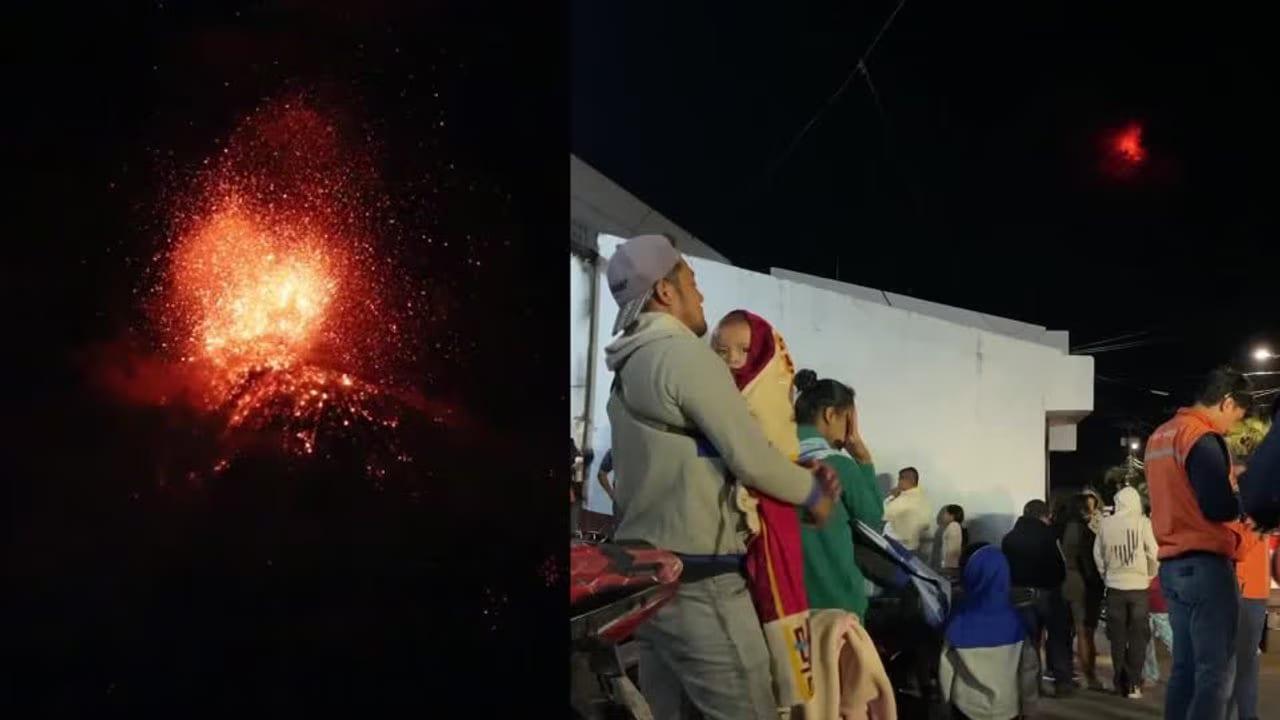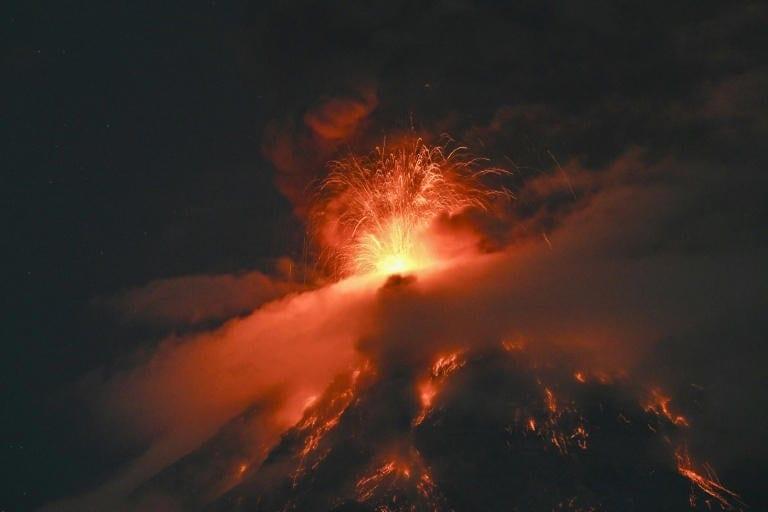
Guatemalan authorities issued the country's second-highest emergency alert on Monday after a major eruption of Central America's most active volcano, Fuego. The eruption prompted the evacuation of nearby villages and prompted the suspension of face-to-face classes in communities near the volcano.
Fuego erupted on Monday morning, with lava flows and huge plumes of ash spewed about six kilometers into the air. The disaster coordination agency Conred declared an orange (danger) alert nationwide, one level below the highest red alert.
Officials began evacuating two villages near the volcano, located 35 kilometers from Guatemala City. The Institute of Volcanology warned that the volcano was moving towards a more explosive phase and advised communities on the western and southern flanks to be on high alert.
The education ministry ordered the suspension of face-to-face classes in communities within two municipalities near the volcano as a precaution. Traffic police also closed a road encircling the mountain range that connects the south coast with Antigua, a UNESCO World Heritage site.
This is not the first time Fuego has caused mass evacuations. Last year, more than 500 people were evacuated after Fuego spewed gas and ash. In 2023, around 1,200 people were evacuated due to an eruption. The 2018 eruption resulted in 215 deaths and left a similar number missing.