The Bangladesh Socialist Party (BASD) has criticized the proposed national budget for continuing old tax policies despite new hopes. BASD claims that instead of increasing direct taxes on the wealthy, the government is continuing to impose indirect taxes on the common people to raise budget revenue.
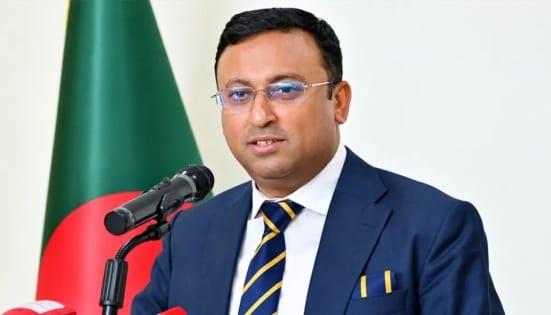
BASD General Secretary Bazlur Rashid Firoz expressed this reaction in a statement on Thursday. He said that a deficit of Tk 243,000 crore has been projected in the proposed budget of Tk 938,000 crore. To fill this deficit, plans have been made to borrow Tk 109,850 crore from foreign sources, Tk 112,000 crore from the banking system, and Tk 15,000 crore from savings instruments.
Bazlur Rashid Firoz said that Tk 127,000 crore has been allocated for debt interest payments in the current fiscal year, which is the largest expenditure sector. He said that considering this reality, initiatives should have been taken to formulate and implement the budget; but the government, without learning from that experience, has followed the traditional policy with a message of new hope.
The BASD General Secretary demanded a specific assessment of the government's failure in revenue collection, recovering money from defaulters, and controlling inflation and the banking sector in the last fiscal year. He also commented that the government has failed miserably to control market syndicates and corruption in the fuel and power sectors.
In the statement, Bazlur Rashid Firoz said that instead of breaking the cycle of corruption in the power and fuel sectors, the burden of price increases has been imposed on consumers. He also alleged that there is not enough reflection of these issues in the Finance Minister's budget speech. He said that the income of ordinary people, workers, and farmers is not increasing at the desired rate. In this situation, the government's figures on per capita income and gross domestic product (GDP) growth may not be fully credible to the people.
During the discussion on the budget in the Jatiya Sangsad, the BASD leader called for a detailed review of the weaknesses of the budget in sectors related to public welfare including agriculture, education, and health, and demanded the correction of the budget's weaknesses.