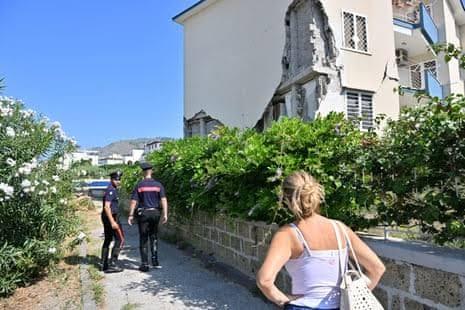
A 4.7-magnitude earthquake struck west of Naples on Friday, causing injuries to 21 people and damaging several properties, according to Italian authorities. The quake, which occurred in the Campi Flegrei area, is part of the region's frequent seismic activity. Two of the injured individuals required emergency hospital treatment. The temblor, occurring at a depth of three kilometers, was followed by a series of lower-intensity aftershocks throughout the night. In addition to the injuries, several unoccupied buildings collapsed and landslides were reported by Nello Musumeci, Italy's minister for civil protection.
The Campi Flegrei area, known for being the site of Europe's largest volcanic crater, experiences frequent seismic activity. The recent earthquake was recorded by the Institute of Geophysics and Volcanology (INGV) at a depth of three kilometers. The aftermath included the collapse of several buildings and landslides, raising concerns among residents and authorities. Civil protection services worked through the night to manage the situation and provide assistance to those affected.
While the immediate focus is on the response to the earthquake, the history of seismic activity in the region underscores the need for continued monitoring and preparedness. The Campi Flegrei area has long been recognized for its volcanic and seismic risks. The recent event serves as a reminder of the potential dangers posed by such natural phenomena, not just for Italy but also for neighboring regions.
Countries around the Mediterranean have experienced similar seismic events, making the need for robust emergency response systems and infrastructure resilience crucial. For countries like Bangladesh, which also faces seismic risks, this event highlights the importance of international cooperation in disaster preparedness and response.