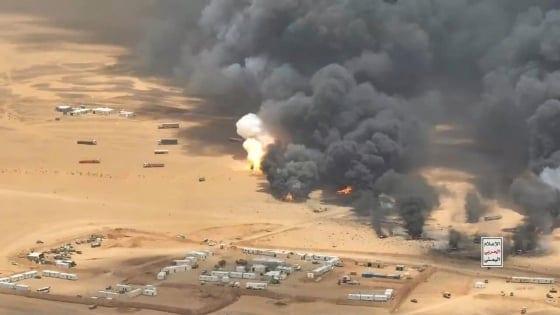
In a significant escalation of Yemen's ongoing civil war, government forces, supported by Saudi Arabia, have reportedly struck Iran-allied Houthi fighters in the strategic Red Sea city of Mocha. Following a week-long offensive, the Houthis captured Yemen's Red Sea coast, gaining control over the Bab al-Mandab Strait, a vital route for Saudi Arabian oil exports. This development comes amid the closure of the Strait of Hormuz due to the US-Iran conflict.
The Yemeni government's news agency Saba reported that the armed forces destroyed Houthi vehicles and weapons, killing members of the militia near the port of Mocha. Majed Abdullah al-Nazili, the spokesman for the Yemeni government forces, confirmed strikes on Houthi vehicles and members on the Mocha-Dhubab road, 11 kilometers from the city. Nazili had previously warned citizens to avoid using the Taiz-Mocha and Mocha-Dhubab roads due to ongoing shelling.
The Houthis seized control of Mocha on Thursday, prompting many residents to flee to Aden, where the internationally recognized government is based. Houthi media reported two Saudi strikes on Mocha's airport, while a local official claimed the city's seaport was hit by six missiles of unknown origin. The Houthi offensive, which began last week, has resulted in over 500 deaths and displaced approximately 46,000 people, according to sources on both sides and the UN migration agency.
This renewed hostilities are part of Yemen's protracted civil war, which started with the Houthi takeover of the capital Sanaa in 2014. The conflict has since drawn in regional powers, with Saudi Arabia leading a coalition in support of the internationally recognized government, while Iran is accused of backing the Houthis. The Bab al-Mandab Strait's significance cannot be overstated, as it is a critical maritime chokepoint for global trade and energy supplies.
The recent clashes in Mocha highlight the escalating tensions and the human cost of the conflict. The displacement of tens of thousands of people and the disruption of vital trade routes underscore the broader implications of the war for Yemen and the region. As the situation continues to unfold, the international community remains concerned about the potential for further escalation and the impact on global energy markets.