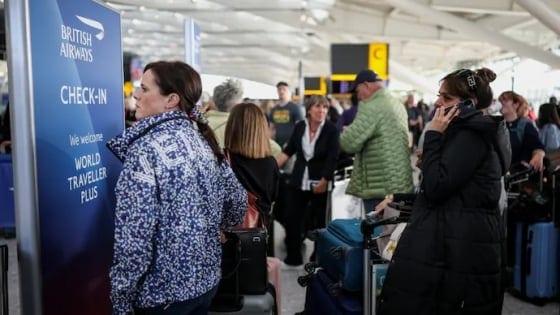
UK travellers faced more disruption on Wednesday as more than 150 flights were cancelled across the country due to a technical glitch in the air traffic control system. The National Air Traffic Services (NATS) has been working to resolve the issue, which has caused significant delays and cancellations since Tuesday. Aircraft tracking website FlightRadar24 reported that 177 flights scheduled for Wednesday had already been cancelled, following 1,300 cancellations on Tuesday. Nearly all the cancellations on Wednesday were at Britain's busiest airport, Heathrow in London.
NATS stated late Tuesday that it was still working to resolve the disruption caused by the'system issue'. "Work is continuing to assist airlines and airports recover from today's disruption," NATS posted on X. "This has been a very complex recovery and has created difficulties for the whole aviation network, from which it will take time to recover." Heathrow resumed departures late Tuesday after suspending arrivals due to the technical issue but warned that disruption was expected to continue, urging passengers to check with their airline before travelling to the airport.
Tuesday's chaos followed a similar technical glitch in July last year that led to numerous flight cancellations. Britain experienced its worst air systems failure in years in 2023, with over 700,000 passengers affected by delays or cancellations. Heathrow, Gatwick, Liverpool, Birmingham, and Edinburgh airports were all impacted, as well as Dublin Airport in Ireland. British Airways and Ryanair reported significant disruptions, with tens of thousands of customers affected.
The ongoing issues have prompted calls for action from airline executives and politicians. Ryanair's Chief Operating Officer, Neal McMahon, called for NATS chief executive Martin Rolfe to be fired, accusing him of failing UK travellers. British Transport Secretary Heidi Alexander said she was "seeking assurances that lessons will be learned and systems that support aviation are up to the job". The repeated failures have raised concerns about the reliability of the UK's air traffic control system and the impact on passengers and airlines.
The disruption has also affected international travel, with Arsenal's flight to Italy for a Champions League match delayed, forcing the cancellation of a pre-match news conference. The ongoing issues highlight the critical role of air traffic control in ensuring the smooth operation of the aviation industry and the need for robust systems to prevent such widespread disruptions.
For Bangladeshi travellers, the ongoing disruptions at UK airports serve as a reminder of the importance of reliable air traffic control systems. With many Bangladeshis travelling to and from the UK for business, tourism, and family visits, the reliability of international air travel is crucial. The repeated technical glitches in the UK's air traffic control system underscore the need for continuous improvement and investment in aviation infrastructure to ensure safe and efficient air travel for all passengers.