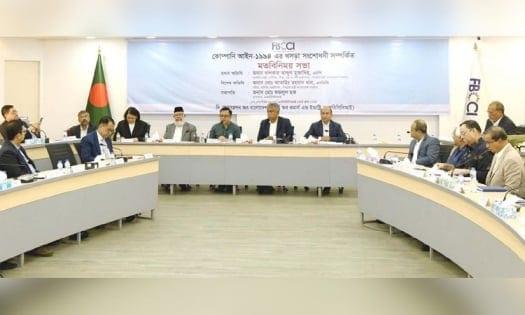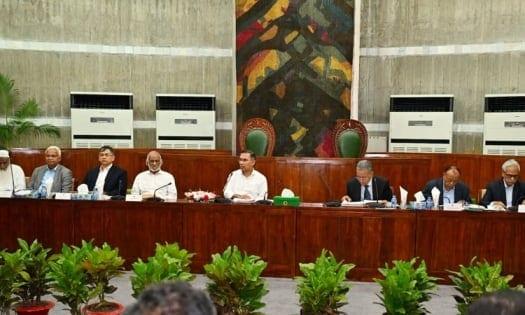
Experts today called for transforming tannery solid waste into valuable resources through ensuring compliance, developing necessary infrastructure and extending policy and financial support to unlock the sector's huge economic potential. The call came at the 11th meeting of the SME Development Working Committee (SMEDWC) of Business Initiative Leading Development (BUILD), held at the conference room of the Ministry of Industries (MoI). The meeting was co-chaired by Industries Secretary Abdun Naser Khan and Chittagong Chamber of Commerce and Industry (CCCI) President Mohammed Amirul Haque.
Abdun Naser Khan said the government is taking the leather sector seriously in view of the challenges arising from Bangladesh's graduation from the Least Developed Country (LDC) category. He said the government is taking steps to improve compliance in the leather sector and address the existing shortcomings of the Central Effluent Treatment Plant (CETP) at the Savar Tannery Industrial Estate (STIE).
CCCI President Mohammed Amirul Haque said as the economic zones have CETP facilities, a similar facility should be developed at Savar while Chattogram also requires such infrastructure. Chief Executive Officer (CEO) of BUILD Ferdaus Ara Begum presented a policy paper titled "Tannery Solid Waste (TSW) Management: Policy Support for SME-Level Export Development", prepared in partnership with The Asia Foundation.
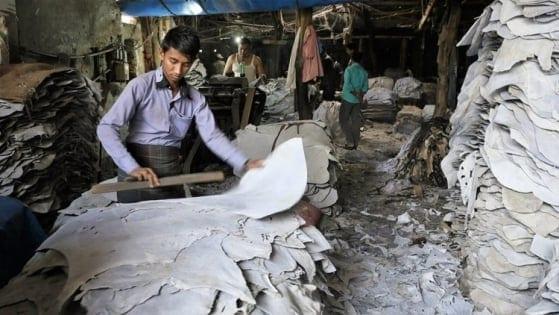
According to the presentation, around 230 tonnes of tannery solid waste (TSW) are generated every day at the Savar Tannery Industrial Estate, including around 60-70 percent chrome-free/pre-tanning waste and 30-40 percent chrome-bearing or tanned waste. The waste represents an untapped economic potential worth hundreds of millions of taka, but remains largely underutilised due to informal collection systems, lack of source segregation and regulatory bottlenecks.
The presentation said the global trade value of 11 identified TSW-based products is around US$1 trillion, while Bangladesh imports about US$95 million worth of such products, indicating significant scope for developing the sector as both an import-substitution and export-oriented industry. The policy paper proposed establishing common cluster-level infrastructure, promoting formal SME participation and producing high-value by-products such as industrial gelatin, protein meal, leatherboard and bio-fertilisers from tannery waste.
It also recommended recognising TSW-based by-products in the National Industrial Policy, introducing proportionate environmental clearance procedures for micro-processors, establishing standardised waste segregation protocols, and providing green financing and quality certification support. Former CCCI President Amir Humayun M. Chowdhury said a significant number of tanneries had closed in recent years, but Bangladesh must now look forward and seize the emerging global opportunity of converting waste into products.
Professor Dr Mohammad Kamruzzaman, director of ILET at Dhaka University (DU), stressed resolving technical problems in the leather sector, particularly the risk of chromium contamination, to ensure safe and quality leather products. He called for assessing the feasibility of different leather products through a holistic approach and suggested establishing an independent authority for the sector.
Md Golam Shahnewaz, managing director of DTIEWTPCL, said tannery wastes such as fleshing, sludge and shaving dust have huge potential for producing value-added products. He said a Chinese company has demonstrated products including gelatin, glue and capsules from tannery waste, but Bangladesh needs umbrella policy support, adequate land and ETP facilities to utilise the opportunity.
Md Matiur Rahaman, joint inspector general of DIFE, identified the tanning industry as one of the country's 43 high-risk sectors. He proposed establishing a dedicated clinic, vocational training centre and other facilities for workers in the tannery area, besides forming separate zoning and by-product-based working committees to explore the full potential of TSW products.
Abul Kalam Azad, president of the Tannery Workers Union, said the sector is facing severe challenges, including factory closures, job losses and inadequate compliance. Of around 155 factories, only a limited number are currently operating, while tannery owners are incurring losses and workers are being laid off, he added. He urged the authorities to adopt a holistic approach to resolve the sector's problems and ensure a safe exit strategy for businesses that cannot continue operations.
Dr Mohammad Razzaqul Islam, director of the Business Promotion Council and Deputy Secretary of the Ministry of Commerce, said the Commerce and Industries ministries are jointly formulating a leather-sector roadmap in line with government priorities. He said Bangladesh needs proper certification to enter premium markets in the United States and European Union, as Bangladeshi products are often sold at a fraction of their potential value due to certification gaps.
He also recommended forming a dedicated working group on leather by-products and utilising available green financing facilities. Bangladesh Bank Additional Director Md Mahbubur Rahaman said entrepreneurs in the sector can access various financing facilities, including a Tk 2,000-crore refinancing scheme and a Tk 3,000-crore cluster development fund. He said the central bank is considering simplifying documentation requirements to facilitate access to such funds.
BSTI Additional Director Mst Rebeka Sultana said tannery waste is one of the major sources of heavy metals and called for proper guidance and stronger measures to control environmental risks. A M Sajjad Hossain Khan, senior project manager of The Asia Foundation, stressed stronger inter-ministerial coordination and harmonised policies to formalise informal recycling networks, streamline solid waste management and unlock the domestic and export potential of tannery and leather by-products.
GIZ Head of Project Md Firoz Alam said government agencies and development organisations alone cannot resolve the sector's problems. He urged entrepreneurs and workers' associations to come forward and play a more active role in bringing about meaningful changes. Engineer Md Rabiul Islam, MIS Officer of SARSO, said there are currently no explicit guidelines requiring the government's 1,100 public institutions to purchase products made from waste materials. He suggested considering ways to integrate value-added products derived from tannery waste into public procurement programmes.
Ministry of Industries Joint Secretary Sultana Yasmin appreciated BUILD and The Asia Foundation for conducting the study and said the ministry would consider the recommendations made at the meeting and circulate its minutes among the relevant organisations. Senior officials from different ministries, government departments, financial institutions and private-sector organisations attended the meeting. Transforming tannery solid waste into valuable resources could significantly boost Bangladesh's leather sector, create jobs, reduce waste and enhance the country's export potential.