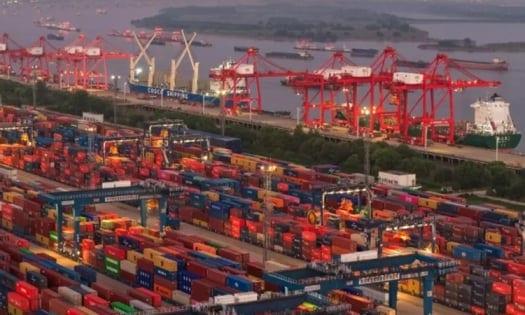
China's trade figures have shown a remarkable surge in August, with both imports and exports experiencing substantial growth. This surge is largely attributed to the global buildout in artificial intelligence, which has significantly increased demand for technology products. The General Administration of Customs reported a 25 percent year-on-year increase in exports, slightly below the 25.9 percent forecast by Bloomberg, and a 28.2 percent rise in imports, which was also below the estimated 31.0 percent. These strong trade numbers have provided a crucial boost to the Chinese economy, which has been struggling with domestic slowdowns.
The growth in China's trade is particularly notable in the AI sector, with exports of computers and related parts increasing by 49.4 percent from January to August. This surge is part of a broader trend that includes strengths in electric vehicles, consumer goods, and industrial equipment. Economists like Zhiwei Zhang, president and chief economist at Pinpoint Asset Management, have highlighted the continued reliance on exporters to support the Chinese economy.
However, the soaring trade surpluses with several key trading partners have become a point of political contention. Overseas officials have raised concerns about the impact of Chinese imports on local competition. The US government, in particular, expressed its concerns about this trade imbalance at the G20 meeting. Shipments to the United States saw a 34.4 percent year-on-year increase last month, compared to a 17 percent increase in July.
The latest trade figures come in the lead-up to an expected summit between Presidents Xi Jinping and Donald Trump, which is anticipated to address the complex trade relationship between the two nations. Last year's tariff war, initiated by the US, led to significant turmoil in their trade dynamics. Although tariffs were tentatively eased late last year following China's restriction on rare earth exports to the US, the relationship remains tense.
Despite the challenges posed by the tariff war, China managed to achieve a record $1.1 trillion surplus in 2025. Strong export growth to the European Union, Southeast Asia, and Africa helped offset the steep decline in shipments to the United States. This diverse trade strategy has allowed China to maintain robust economic performance even amid global trade uncertainties.
For Bangladesh, China's booming trade and the upcoming summit between Xi and Trump hold significant implications. As a key trading partner and recipient of Chinese investments, Bangladesh stands to benefit from stable and growing trade relations. However, the political and economic tensions arising from the trade imbalances could also pose challenges, necessitating careful navigation of the geopolitical landscape.