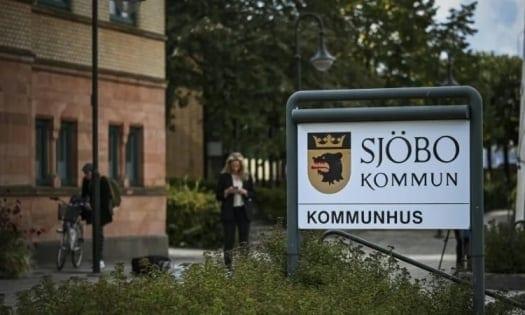
Nearly four decades ago, the small Swedish municipality of Sjobo made international headlines by voting overwhelmingly against accepting refugees. This controversial decision, which saw two-thirds of residents oppose the move, has since become a cornerstone of Sweden's current anti-migrant sentiment, resonating with many ahead of the upcoming general election.
The 1988 referendum in Sjobo was sparked by Sweden's new strategy to distribute refugees more evenly across the country. The town, then home to around 15,400 people, was asked to take in approximately 15 refugees. This seemingly small request ignited a fierce debate, dividing the community and attracting widespread media attention.
Sven-Olle Olsson, a municipal councillor at the time, vehemently opposed the idea, arguing that the next generation of Swedes would no longer be 'blonde and blue-eyed.' His stance reflected the deep-seated fears and prejudices that the referendum brought to the surface. The 'No' side ultimately won with almost 68 percent of the vote, creating a lasting rift in the town.
Today, Sjobo's controversial past is seen as a precursor to Sweden's current political climate. The far-right Sweden Democrats, who won 43 percent of the votes in Sjobo during the 2022 general election, are now a key ally to the country's minority right-wing coalition. Their anti-immigration agenda, focusing on 're-migration' of immigrants, has gained significant traction.
The shift in public opinion is evident. According to a recent report by the Swedish Institute for Futures Studies, around half of Swedes now favor fewer refugees, although labor immigration remains popular. This change is particularly poignant for Edmir Mehmeti, a 24-year-old Sjobo native and candidate for the conservative Moderate Party, who advocates for a restrictive immigration policy despite his family's struggles upon arriving from Kosovo in 1998.
Sjobo's transformation from a town divided by a referendum to a symbol of Sweden's mainstream anti-migrant sentiment underscores the complex and evolving nature of immigration debates. As Sweden continues to grapple with integrating its immigrant population, the lessons from Sjobo serve as a stark reminder of the enduring impact of such decisions.