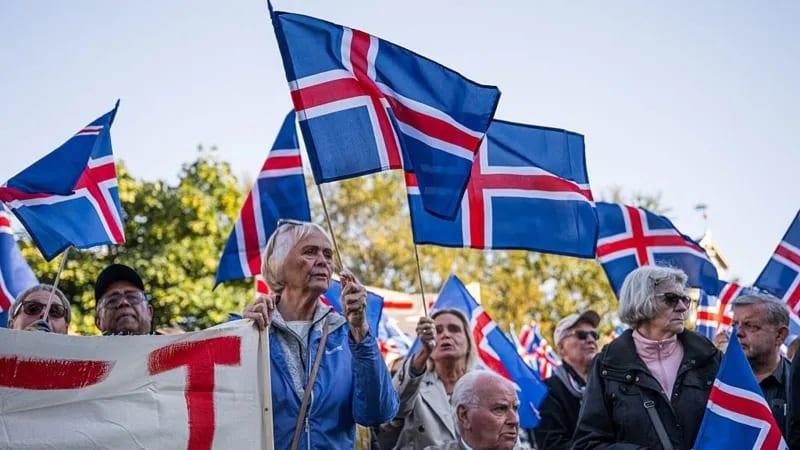
In a closely watched referendum, Icelanders will vote on Saturday whether to resume negotiations for European Union membership. The result is expected to be very close, with the latest opinion polls showing a tight race between the 'Yes' and 'No' sides. Iceland, a country of just under 400,000 people, applied to join the EU following a severe financial crisis in 2009. However, membership talks were suspended in 2013 when a eurosceptic government came to power.
Foreign Minister Thorgerdur Katrin Gunnarsdottir, a staunch europhile, remains optimistic despite the tight race. "It's pretty tight, but I'm always optimistic. It's not done until it's done," she told AFP. Voting begins at 9:00 am and closes at 10:00 pm, with the first reliable results expected late Saturday at the earliest.
The referendum asks voters to answer 'Yes' or 'No' to the question: "Should Iceland resume accession negotiations with the European Union?" If the 'Yes' side wins, an accession agreement would be negotiated with Brussels and then put to a new referendum on actual membership. One of the key issues is fisheries, a major part of Iceland's economy, which Reykjavik wants to retain exclusive control over.
Iceland's economy is now flourishing, leading some voters to question the need for EU membership. However, soaring inflation and interest rates have made the prospect of joining the eurozone appealing to others. The global geopolitical landscape, including the war in Ukraine and the unpredictability of US President Donald Trump, has also influenced the debate.
The EU is closely monitoring the referendum. Brussels sees Icelandic membership as an example of positive enlargement that could make it more palatable to take in poorer countries and potentially change minds in non-EU member Norway. "Iceland's decision would undoubtedly strengthen the case for the EU to welcome new members," EU Enlargement Commissioner Marta Kos noted.