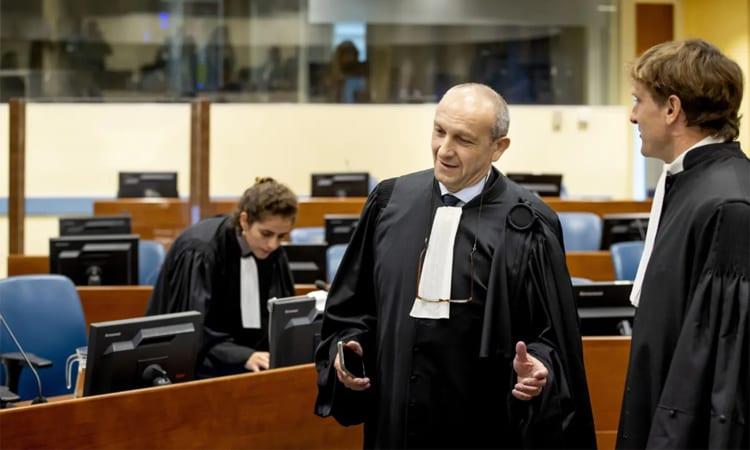
A Dutch court will deliver its verdict on Friday against a Rwandan man suspected of inciting and participating in the massacre of 3,000 Tutsis during the 1994 Rwandan genocide. Prosecutors allege that the Rwandan-born Dutch national, identified as Eugene N., was personally involved in the killings and should spend the rest of his life in prison. The suspect denies the charges, claiming he was a victim and lost dozens of his own relatives in the violence.
The 1994 Rwandan genocide saw the brutal killing of an estimated 800,000 people, predominantly from the Tutsi minority, over the course of three months. European courts, including those in the Netherlands, have tried and convicted several individuals under the principle of universal jurisdiction, which allows them to hear the most serious crimes even if committed abroad. Eugene N. fled to the Netherlands in 1998, and despite an international arrest warrant issued by Rwandan authorities in 2014, he cannot be extradited as he has obtained Dutch nationality.
Dutch prosecutors opened their own investigation in 2020, interviewing dozens of witnesses in Rwanda before arresting Eugene N. in 2024. The case has significant implications, not only for the victims and their families but also for international law and the pursuit of justice for crimes against humanity. The verdict will be closely watched, as it could set a precedent for future trials of genocide suspects residing in Europe.
FAQ
**Q: Who is Eugene N. and what is he accused of?** A: Eugene N. is a Rwandan-born Dutch national accused of inciting and participating in the massacre of 3,000 Tutsis during the 1994 Rwandan genocide. Prosecutors allege he was personally involved in the killings and went on a rampage of looting and destruction before the massacre.
**Q: What evidence is there against Eugene N.?** A: Prosecutors have interviewed dozens of witnesses in Rwanda as part of their investigation. They claim Eugene N. was personally involved in the killings, including throwing a grenade into a stadium where terrified victims had sought refuge.
**Q: Why can't Eugene N. be extradited to Rwanda?** A: Eugene N. cannot be extradited to Rwanda because he has obtained Dutch nationality. Under Dutch law, he is protected from extradition despite an international arrest warrant issued by Rwandan authorities in 2014.
**Q: What is the principle of universal jurisdiction?** A: The principle of universal jurisdiction allows courts in one country to try individuals for serious international crimes, such as genocide, even if those crimes were committed in another country. This principle has been used by European courts to try and convict several individuals involved in the Rwandan genocide.