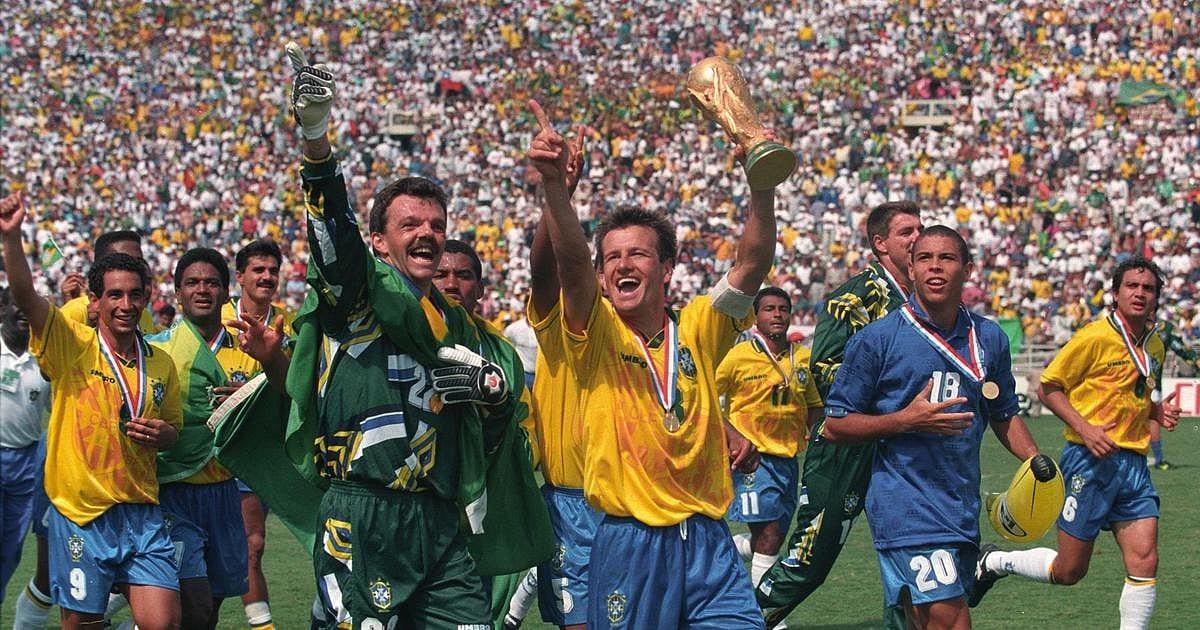
The 1994 World Cup, hosted by the United States, marked a significant moment in football history. It was the first time the tournament was held in a country where football, or 'soccer' as it's known locally, was not the primary sport. Despite initial skepticism, the event was a success, with an average attendance of 69,000 spectators per match, a record that still stands. The tournament saw several memorable moments, including the tragic death of Colombian player Andres Escobar, the drug scandal involving Diego Maradona, and Brazil's fourth World Cup victory under coach Carlos Alberto Parreira. The 1994 World Cup also introduced a new points system, awarding three points for a win, which led to more exciting matches and higher goal averages.
Memorable Moments and Tragic Events
One of the most tragic events of the 1994 World Cup was the death of Colombian player Andres Escobar. Escobar scored an own goal in a match against the USA, which led to Colombia's elimination from the tournament. Upon returning to Colombia, he was tragically murdered. Another notable incident was the drug scandal involving Argentine star Diego Maradona, who was sent home after testing positive for performance-enhancing drugs. These events added a layer of drama to the tournament, making it one of the most memorable in football history.
Brazil's Triumph and the Emergence of Underdogs
Brazil's victory in the 1994 World Cup was a significant moment for the country, marking their fourth title. The team, led by coach Carlos Alberto Parreira, played a pragmatic style of football that focused on efficiency rather than flair. Key players like Romario and Bebeto played crucial roles in the team's success. The tournament also saw the emergence of several underdog teams, including Sweden, Romania, and Bulgaria, who made deep runs in the competition. The 1994 World Cup was a testament to the unpredictability and excitement of football, with moments of both triumph and tragedy.