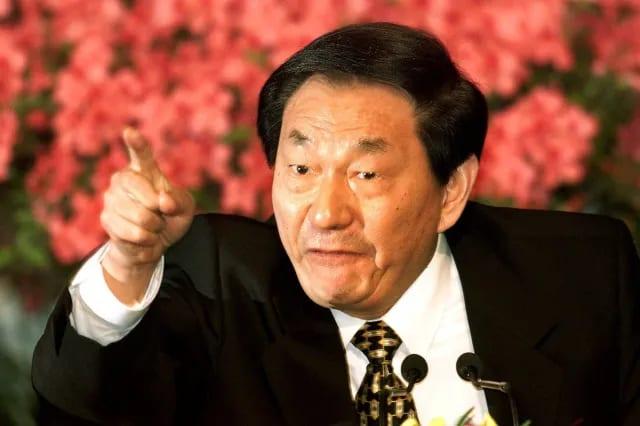
In a somber announcement, China's state media reported on Wednesday that Zhu Rongji, the former premier who played a crucial role in the country's economic reforms, has died at the age of 97. Zhu, who served as premier from 1998 until 2003, was celebrated for his market-oriented reforms that significantly contributed to China's rapid economic growth. His death marks the end of an era for a leader who was instrumental in driving China's transition towards a market economy.
Zhu Rongji was known for his decisive approach and his ability to implement sweeping economic reforms. During his tenure, he oversaw the privatization of many state-owned enterprises, which were deemed unprofitable, and promoted the concept of home ownership in urban areas. His efforts were pivotal in stabilizing the economy during a time of global financial turbulence and helped lay the groundwork for China's emergence as a global economic power.
An obituary, jointly issued by China's top political bodies and carried by Xinhua, the state news agency, stated that Zhu Rongji passed away in Beijing after medical treatment proved unsuccessful. The obituary highlighted Zhu's contributions to the Communist Party of China, describing him as an 'outstanding member' and a 'loyal communist fighter.' It praised his life as one dedicated to serving the people and the communist cause, noting that his passing represents a significant loss for both the Party and the nation.
Zhu Rongji's legacy extends beyond his economic reforms. He was also recognized for his straightforward manner and his commitment to anti-corruption efforts. Under his leadership, China saw significant improvements in its financial sector and infrastructure, which have had long-lasting impacts on the country's development. His market-driven policies are often credited with setting the stage for China's future economic successes.
As China continues to navigate its path in the global economy, Zhu Rongji's influence is likely to be remembered as a period of significant transformation and modernization. His policies helped to shift China from a centrally planned economy to one that embraced market mechanisms, a transition that has profoundly shaped the country's economic landscape.