Rajshahi Medical College Hospital (RMCH) has significantly enhanced its diagnostic capabilities with the installation of several advanced laboratory machines, provided free of cost. This development is expected to reduce patients' waiting times and improve the accuracy of medical tests. The equipment, donated by Health Care, ABC Corporation, and Victor Trading, has already started improving pathology and cardiac laboratory services, enabling quicker diagnosis and timely treatment.
Enhanced Laboratory Services
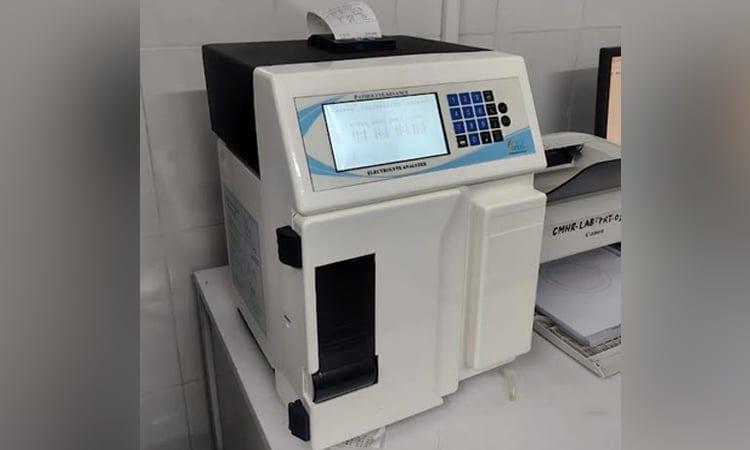
The newly installed equipment includes a state-of-the-art cell counter, hormone analyser, urine analyser, unstained cell counter, ESR analyser, and electrolyte analyser. Four of these machines were manufactured in Europe, while the others were produced in India and China. RMCH spokesperson and Assistant Professor Dr. Sheikh Shamim Ahmed said some of the machines have already been installed at the hospital's outdoor pathology laboratory.
Dr. Ahmed noted that the reports generated by these machines are highly reliable and more accurate than those produced by the previous equipment, citing feedback from the hospital's pathology department. One of the major additions is the Maglumi X-3 analyser installed in the cardiac laboratory. Unlike the existing Point of Care Testing (POCT) analyser, which performs tests individually and requires more time, the new machine is based on chemiluminescence immunoassay technology, offering greater sensitivity and specificity.
Improved Patient Care
The system is capable of performing around 200 tests an hour, significantly increasing laboratory capacity while lowering testing costs. The technology has received approval from the United States Food and Drug Administration (FDA) and is already being used in many leading hospitals across the country, including Bangladesh Medical University and Dhaka Medical College Hospital.
The hospital has also replaced its three-parameter electrolyte analyser with a five-parameter system capable of measuring sodium, potassium, chloride, pH, and bicarbonate. Physicians believe the additional testing capability will help improve the diagnosis and management of critically ill patients. The newly installed ESR analyser follows the internationally recognised Westergren method, regarded as the global standard for erythrocyte sedimentation rate (ESR) testing, ensuring more dependable results.
Dr. Shamim Ahmed said the upgraded equipment would improve the quality of diagnostic services by providing faster and more accurate reports while reducing waiting times for patients. He noted that the older machines frequently developed mechanical faults, disrupting laboratory services and delaying treatment. "The new equipment will help ensure uninterrupted testing, although the existing machines will continue to operate alongside the new ones whenever necessary," he added.