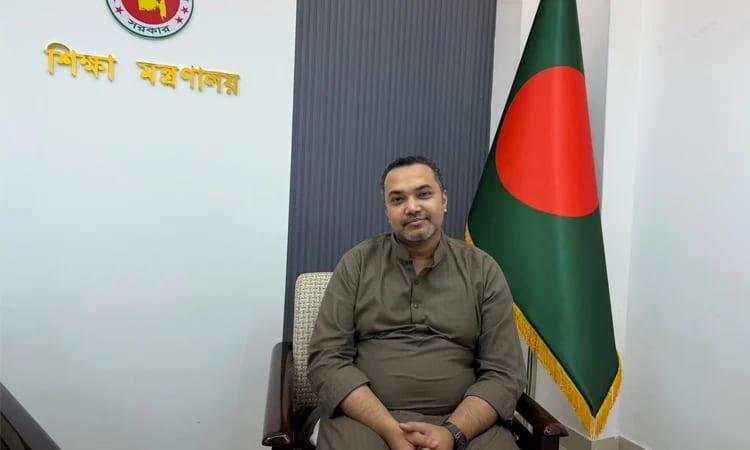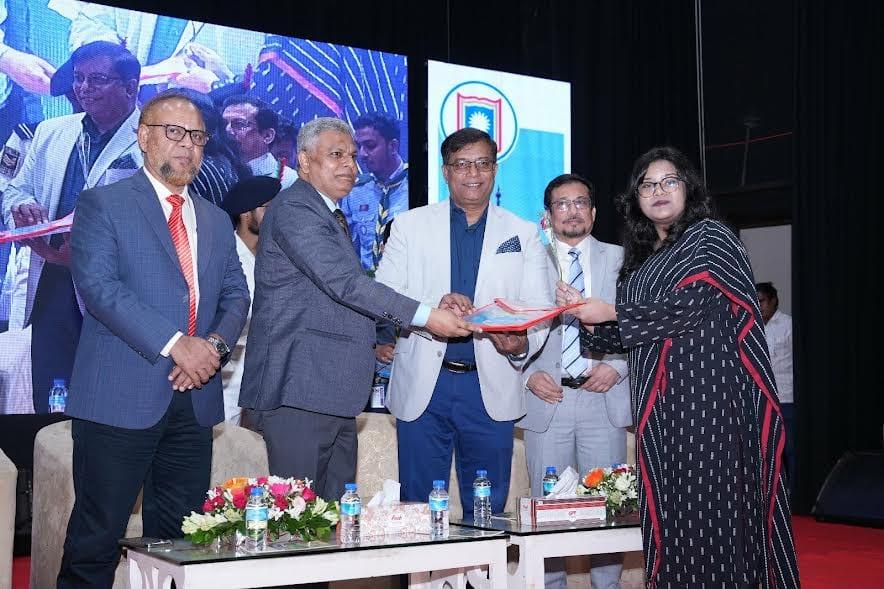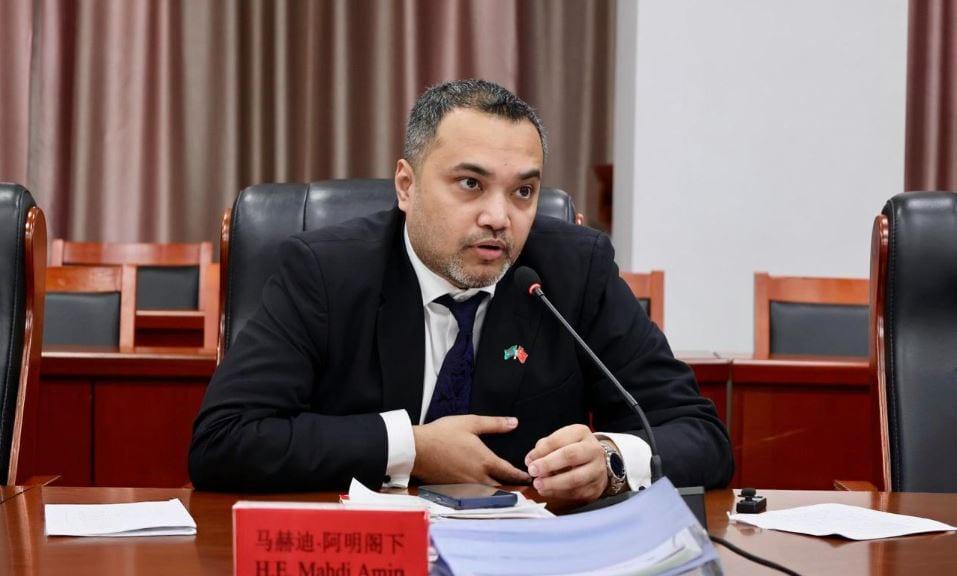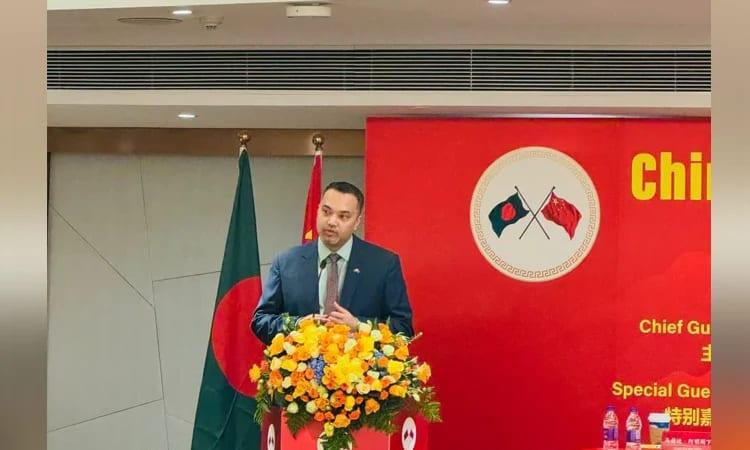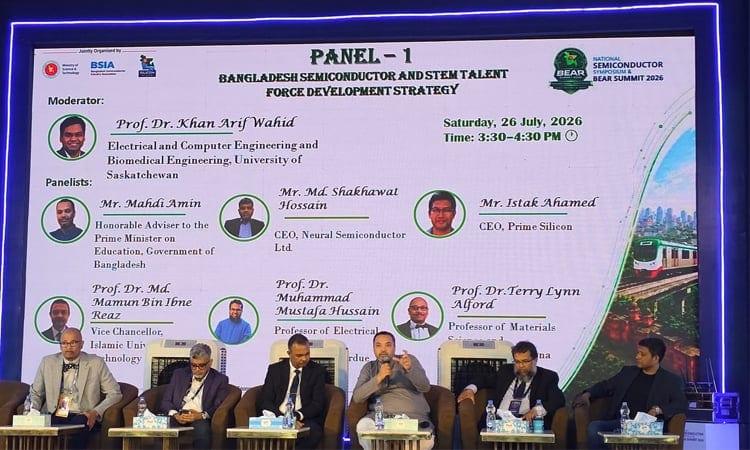
Prime Minister's Education Adviser Mahdi Amin announced that the government will establish a strong trilateral ecosystem by bringing together the country's universities, industries, and the expertise and experience of Bangladeshis living abroad under one platform. Amin made this announcement at the closing ceremony of the two-day National Semiconductor Symposium and BEAR (Bangladesh Electronics, AI and Robotics) Summit 2026 at Novo Theatre in the capital. The summit was jointly organized by the Ministry of Science and Technology, Bangladesh Semiconductor Industry Association (BSIA), and the government's Silicon River Bangladesh programme, under the theme 'Building Bangladesh's Semiconductor Future Through Global Partnerships.'
Amin highlighted the existing gap between academia and industry in Bangladesh, despite the large number of students and universities. He emphasized the government's commitment to bridging this divide by establishing effective links between higher educational institutions and the industrial sector to foster young talent and create employment opportunities.
The Education Adviser also stressed the need to transform "brain drain" into "brain circulation," noting that many Bangladeshi academics, engineers, and researchers are working with distinction at leading universities and renowned technology companies around the world. The government is creating platforms to harness the expertise and experience of expatriate Bangladeshis to support the country's economic and technological advancement.
Amin pointed out that many universities in the country lack adequate modern laboratories and sufficient research facilities. In response, the current national budget has allocated a record amount of funding for higher education and research. This allocation will be used not only for constructing buildings but also for establishing advanced laboratories and creating a research-friendly environment.
The government also has a medium-term plan to establish specialized research centers, modeled after those in advanced countries such as the United Kingdom. Amin called for making education more application-oriented alongside theoretical learning, suggesting that students should be equipped with practical skills through internships, summer schools, visiting lectures, and greater involvement of industry experts. He also advocated for integrating technical and vocational education into the educational mainstream alongside general education.
Praising the entrepreneurial spirit and talent of the country's youth, Amin expressed confidence that with proper government guidance and a supportive ecosystem, Bangladesh's emerging young generation will be capable of becoming global leaders in the fields of the Fourth Industrial Revolution, robotics, and artificial intelligence.