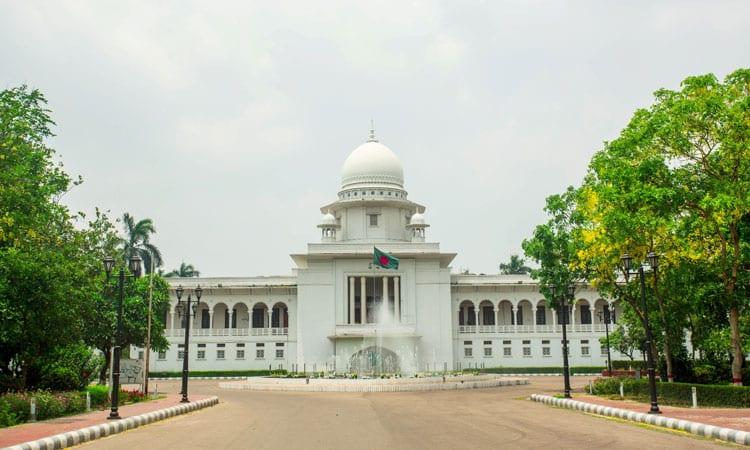
The Appellate Division of the Supreme Court (SC) today upheld a High Court (HC) verdict declaring parts of the 15th Amendment to the Constitution unconstitutional and void by dismissing three separate appeals. This decision effectively restores the caretaker government (CG) system and the referendum. "Appeal is dismissed," read each of the three identical short judgments delivered by the four-member Appellate Division bench headed by Chief Justice Zubayer Rahman Chowdhury.
Background of the 15th Amendment
The 15th Amendment of the Constitution was placed in the Jatiya Sangsad (JS) on June 30, 2011, and a gazette was published on the amendment on July 3 in 2011. The amendment introduced changes to 54 provisions of the Constitution, including the abolition of the caretaker government system. Several writ petitions challenging the amendment were subsequently filed with the High Court, which delivered its judgment on December 17, 2024.
High Court's Earlier Judgment
The High Court delivered the judgment on December 17, 2024, declaring the abolition of the caretaker government system through the 15th Amendment unconstitutional and void. The High Court bench of Justice Farah Mahbub and Justice Debashish Ray Chowdhury also restored the constitutional provision for a referendum.
Appeals Against the HC Verdict
Four citizens, including SUJON (Shushashoner Jonno Nagorik) Secretary General Badiul Alam Majumder, filed one of the appeals against the judgment. Freedom Fighter Md Mofazzal Hossain of Naogaon filed another appeal, while Jamaat-e-Islami Secretary General Miah Golam Parwar filed the third on behalf of his party.
Legal Representation
Senior Advocate Sharif Bhuiyan represented the four appellants, including Badiul Alam Majumder. Attorney General Barrister Md Ruhul Quddus Kazal and Additional Attorney General Barrister Aneek R Haque appeared for the state. Senior Advocate Mohammad Shishir Manir represented Jamaat-e-Islami, while Advocate ASM Shahriar Kabir appeared for Md Mofazzal Hossain.
Implications of the SC Verdict
The Supreme Court's decision to uphold the High Court's verdict has significant implications for Bangladesh's political landscape. The reinstatement of the caretaker government system and the referendum provision is expected to influence future electoral processes and political stability in the country. This ruling is likely to be a focal point for political discussions and may lead to further legal challenges or amendments.