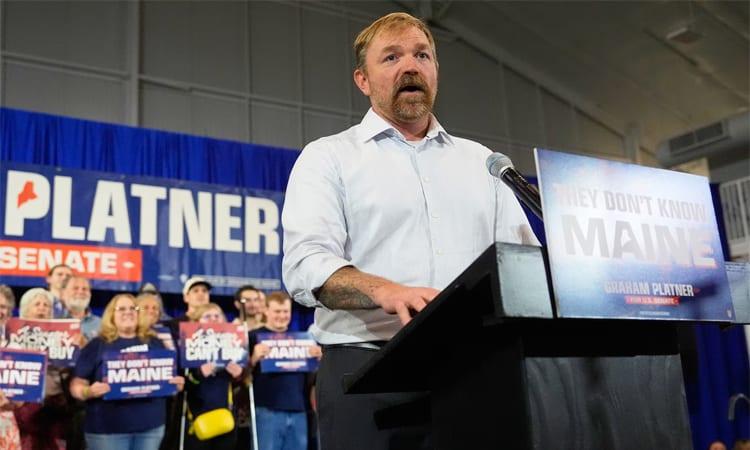
Graham Platner, the Democratic nominee for a crucial US Senate seat in Maine, has suspended his campaign following a rape allegation. Platner, a Marine veteran and political newcomer, won the Democratic primary last month to challenge Republican Senator Susan Collins in November's midterm elections. His withdrawal gives Maine Democrats only days to regroup in a race central to the party's hopes of regaining control of the US Senate.
Allegation and Withdrawal
The withdrawal comes after Politico reported that Jenny Racicot, a 41-year-old Maine resident who previously dated Platner, accused him of forcing her to have sex in late 2021 despite her repeated objections. Platner strongly denied the allegation, calling it 'troubling, serious and false' and stating that any accusation of non-consensual behavior was 'categorically untrue.'
Political Fallout
Despite his denial, Platner's campaign rapidly lost support across the Democratic Party. Senate Democratic Leader Chuck Schumer and Democratic Senatorial Campaign Committee chair Kirsten Gillibrand urged him to withdraw, warning that the party's campaign arm would not invest in the Maine race if he remained on the ballot. Several other former supporters in the Senate also called for him to step aside.
Replacement Process
Under Maine law, Democrats can replace Platner on the ballot because he quit before a July 13 deadline. The state party has until July 27 to choose a new nominee. Progressives have already begun pushing for a nominee who can inherit Platner's movement and policy agenda, while party leaders are under pressure to choose someone able to reassure moderates, independents, and women voters.
Significance for Democrats
Maine is one of the party's clearest Senate pickup opportunities, and Democrats likely need to gain several seats to win back the chamber. The turmoil around Platner has given Republican Senator Susan Collins' campaign a reprieve and exposed Democratic divisions over candidate vetting, populism, and electability.
Why This Matters
This development is significant as it highlights the challenges faced by political parties in vetting candidates and managing crises. For Bangladesh readers, it underscores the importance of thorough candidate screening and the potential impact of personal scandals on political campaigns. It also illustrates the fluid nature of political alliances and the pressure on parties to adapt quickly to changing circumstances.