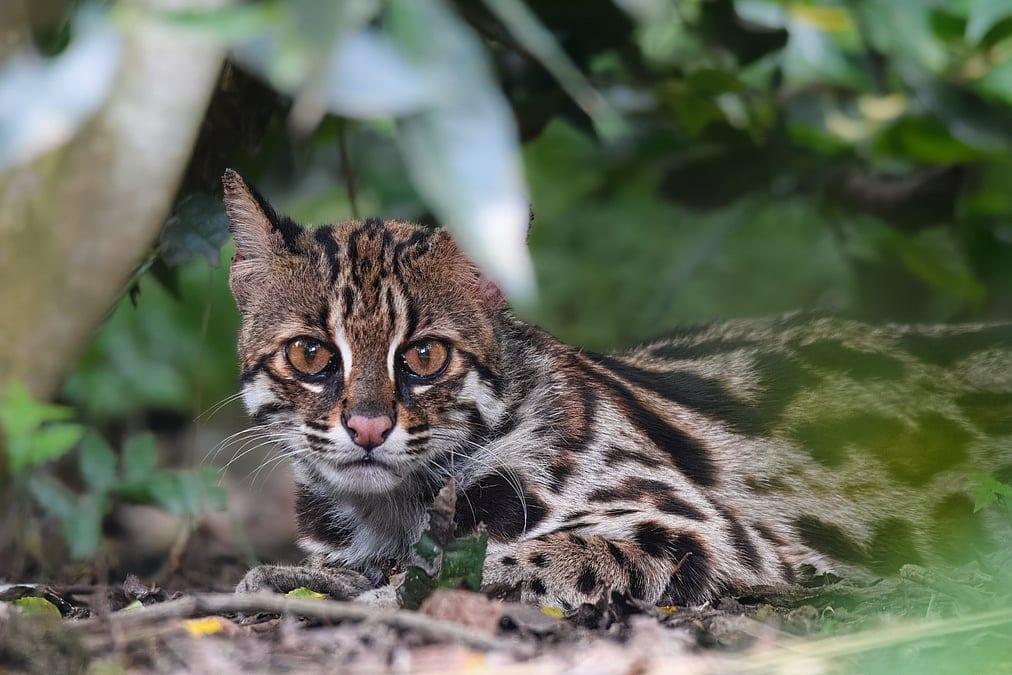
Wildlife photographer Kajol Hajra recently captured rare images of a leopard cat, also known as the Bengal cat, in Bhadair Tea Garden, Moulvibazar. The sighting occurred on May 14 during an expedition to Lauachhara National Park. Despite the initial missed opportunity, Hajra patiently waited and successfully photographed the elusive cat. The leopard cat, scientifically named Prionailurus bengalensis, is a rare and protected species in Bangladesh. Its population is declining due to habitat destruction and human conflict.
Characteristics and Habitat
The leopard cat, with a body length of 39 to 66 cm and a tail length of 17 to 31 cm, weighs between 3 to 4 kg. It has a light yellowish upper body and a white lower body, with numerous black spots and stripes. Primarily nocturnal, it is also active at dawn and dusk, living solitary and excelling in climbing and swimming. Its diet consists of large insects, birds, and small vertebrates. It inhabits forested areas, grasslands, and dense vegetation, often taking shelter in tree hollows.
Reproduction and Lifespan
Leopard cats form long-term pairs during the breeding season from February to May. After a gestation period of 60 to 70 days, a female gives birth to two to four kittens. The kittens reach adulthood at about 18 months, and the average lifespan in captivity is approximately 13 years.