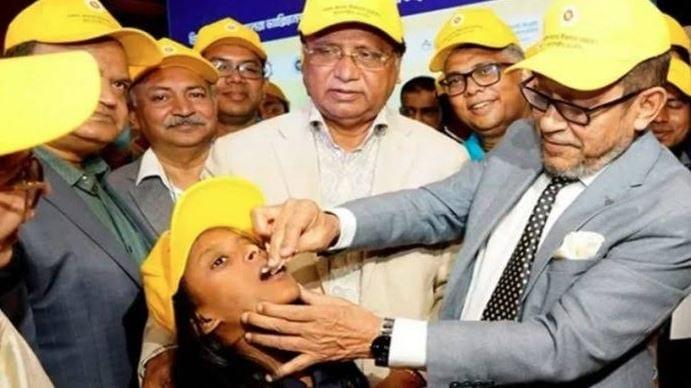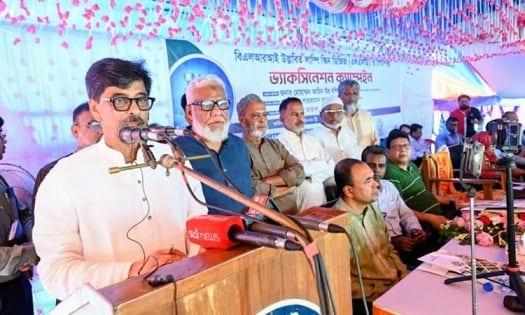
In a significant stride towards safeguarding Bangladesh’s livestock, Fisheries, Livestock, and Agriculture Minister Mohammed Aminur Rashid announced the introduction of a locally developed viral Lumpy Skin Disease (LSD) vaccine. This initiative aims to control the highly damaging disease and shield livestock from its spread. Speaking as the chief guest at the inaugural ceremony of a vaccination campaign in Adarsha Sadar upazila, the minister highlighted the financial burden LSD imposes on farmers and emphasized the importance of timely vaccination to maintain cattle health.
Minister Aminur Rashid noted that the country requires around 2.5 crore doses of LSD vaccine annually and had previously relied on imported vaccines. With the advent of domestic production, the process of developing this vaccine within Bangladesh has commenced. He urged farmers to ensure regular vaccination of their livestock, stressing that preventive measures are crucial as the disease can rapidly spread among animals if it breaks out on a farm.
The vaccination campaign, supported by the Department of Livestock Services (DLS), began with the administration of 2,000 doses of LSD vaccine and 100 doses of Goatpox vaccine to livestock in the upazila. The event was presided over by BLRI Director General Dr Shakila Faruq, with DLS Director General Md Shahzaman Khan as the special guest. Senior officials from DLS and BLRI, local political leaders, and numerous livestock farmers attended the program.
Aminur Rashid also emphasized the cultivation of a newly developed high-nutrition grass to reduce livestock feed costs. This grass variety, containing around 18 percent protein, was developed by the Bangladesh Livestock Research Institute (BLRI). By cultivating this grass, farmers can produce quality animal feed at lower costs and decrease their dependence on granular feed.
Furthermore, the minister announced a new government initiative to conserve and expand the country’s indigenous Black Bengal goat. Under this program, union-level entrepreneurs will be developed, training will be provided, improved goat breeds will be supplied, and marketing support will be extended. Women and young entrepreneurs will be given priority in this initiative, aiming to bolster the livestock sector’s sustainability and resilience.