Residents in southwest Japan are struggling to cope after a 7.1-magnitude earthquake hit the Kumamoto region, just ten years after a similar disaster. At least 28 people have been killed, and tens of thousands are without power and water. Temperatures are expected to reach 35C, exacerbating the situation for those affected.
Sachi Nishiyama, who spent two years in temporary housing after the 2016 twin quakes, slept in her car this week for the air conditioning and privacy, describing it as 'exhausting'. The 2016 earthquakes, measuring 7.3 and 6.5 magnitudes, killed 273 people.
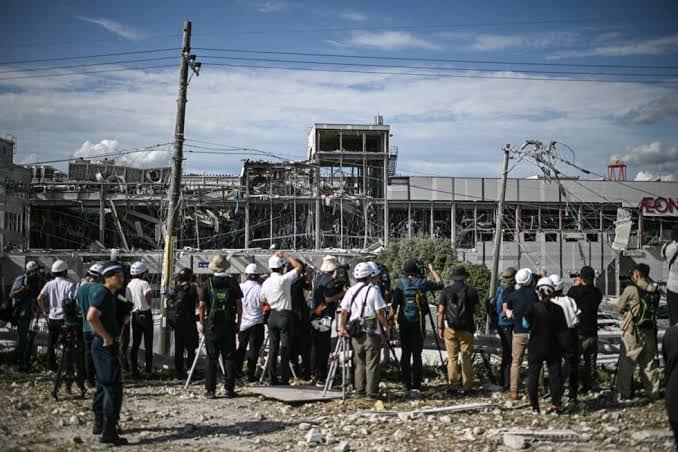
A suspected gas explosion at the recently renovated Aeon shopping mall, following Tuesday's quake, left the facility in ruins with four confirmed deaths. Businessman Fumihiko Matsuura, who visited the mall recently, said, 'I was just here. It's like I narrowly escaped the danger.'
Aftershocks continue to rattle the area, with residents fearing another major quake. Many are taking shelter in school gyms and municipal offices, while others opt to sleep in their cars for privacy. Convenience stores remain open, but the lack of water and power is taking a toll on locals.
The situation is particularly challenging for older residents, many of whom are sheltering in community centers. Marie Ryuzaki, 60, said, 'The windows of my second-floor apartment shattered, and I saw my appliances fly.' Despite the challenges, residents are banding together, with some braving the heat to clean up and others sharing resources.