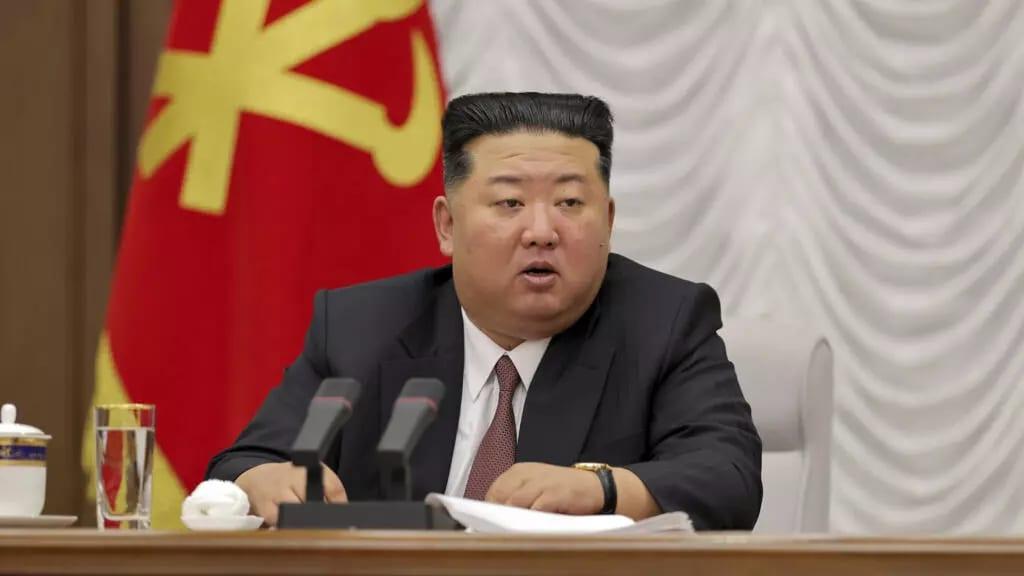
North Korea has declared its intention to strengthen its nuclear force 'both in quality and quantity' and to broaden the functions of its military intelligence agency, with a particular focus on South Korea, according to state media. This announcement comes amid ongoing tensions and the absence of a peace treaty following the Korean War, which concluded in 1953 without a formal resolution.
Meeting of the Central Military Commission
The decision was made during an enlarged meeting of the ruling party's central military commission, as reported by the Korean Central News Agency (KCNA). The meeting discussed measures to enhance the nuclear force and expand the missions of the General Reconnaissance and Intelligence Bureau, the military intelligence agency responsible for operations involving South Korea.
Shift in North Korea's Stance
Hong Min, a senior researcher at the Korea Institute for National Unification, noted that North Korea's latest move reflects a shift in Pyongyang's approach, treating the two Koreas as 'two hostile states' rather than adhering to the previous armistice-based framework. This change implies that military reconnaissance activities targeting South Korea may have increased diplomatic implications.
Military Technology and Espionage
Experts suggest that North Korea may be seeking to acquire advanced military technology, including surveillance satellites, in exchange for the troops it has sent to aid Russia in its conflict with Ukraine. In 2023, North Korea successfully launched a military spy satellite, claiming it was capturing images of major US and South Korean military sites.
South Korea's Response
South Korea's Unification Ministry stated that it is 'closely monitoring' any developments related to the reported expansion of North Korea's military intelligence unit. The two Koreas have a history of espionage, including high-profile assassinations and infiltrations.
Implications for the Region
The announcement underscores the ongoing security challenges in the region and highlights the need for continued vigilance and diplomatic efforts to manage the tensions between the two Koreas. The international community, including Bangladesh, must remain aware of these developments and their potential impact on global security.