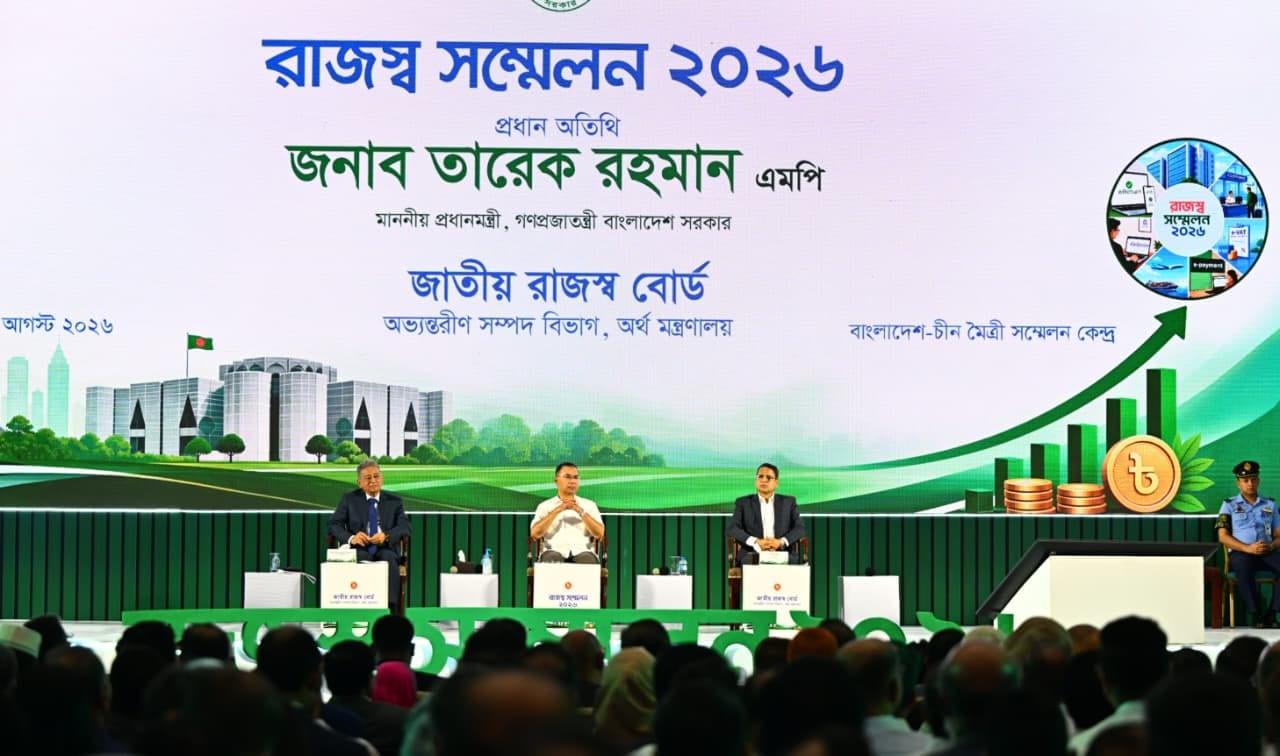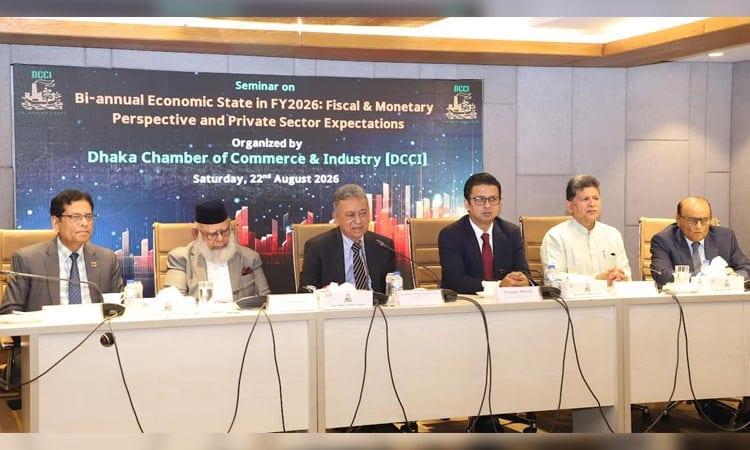
Economists, business leaders and policy experts today called for coordinated fiscal and monetary reforms, stronger private-sector confidence and a predictable business environment to revive investment and economic growth in the country. They made the call at a seminar titled 'Biannual Economic State in FY2026: Fiscal and Monetary Perspective and Private Sector Expectations', organised by the Dhaka Chamber of Commerce and Industry (DCCI) at its auditorium in Dhaka. Finance Minister Amir Khosru Mahmud Chowdhury attended the seminar as the chief guest, while several prominent economists and business leaders were present as special guests.
Dr Hossain Zillur Rahman, Executive Chairman of Power and Participation Research Centre (PPRC) and Chairman of BRAC, highlighted the critical juncture the country's economy is facing. He stressed the need to address structural problems in the financial sector, reduce non-performing loans and ensure adequate credit for small and medium enterprises (SMEs). He proposed establishing an 'Economic Reform Acceleration Unit' to monitor the implementation of the government's economic reform initiatives.
Mahbubur Rahman, President of ICC Bangladesh, stressed the importance of strengthening private-sector confidence, capacity and competitiveness, and ensuring a stable, predictable and investment-friendly policy environment for sustainable and inclusive economic growth. Dr Zaidi Sattar, Chairman of Policy Research Institute of Bangladesh (PRI), noted a significant gap between policy formulation and implementation in Bangladesh, which has hindered the country from deriving the desired benefits from its policies. He called for appropriate strategies to be formulated and implemented within the available timeframe for Bangladesh's LDC graduation.
FAQs
- **What specific reforms were proposed to revive private investment?** Proposed reforms include coordinated fiscal and monetary reforms, addressing structural problems in the financial sector, reducing non-performing loans, ensuring adequate credit for SMEs, establishing an 'Economic Reform Acceleration Unit', strengthening private-sector confidence, ensuring a stable and predictable business environment, and closing the gap between policy formulation and implementation.
- **How does the current economic environment affect private investment?** The current economic environment, marked by high inflation, restrictive import policies, and a significant gap between policy formulation and implementation, has created an uncertain and unstable business environment. This has eroded private-sector confidence and hindered investment. Experts argue that coordinated reforms and a predictable business environment are essential to reviving private investment.
- **What role does the government play in reviving private investment?** The government plays a crucial role in reviving private investment by implementing coordinated fiscal and monetary reforms, addressing structural issues in the financial sector, ensuring adequate credit for businesses, creating a stable and predictable business environment, and effectively bridging the gap between policy formulation and implementation. The establishment of an 'Economic Reform Acceleration Unit' was proposed to monitor and ensure the successful implementation of these reforms.