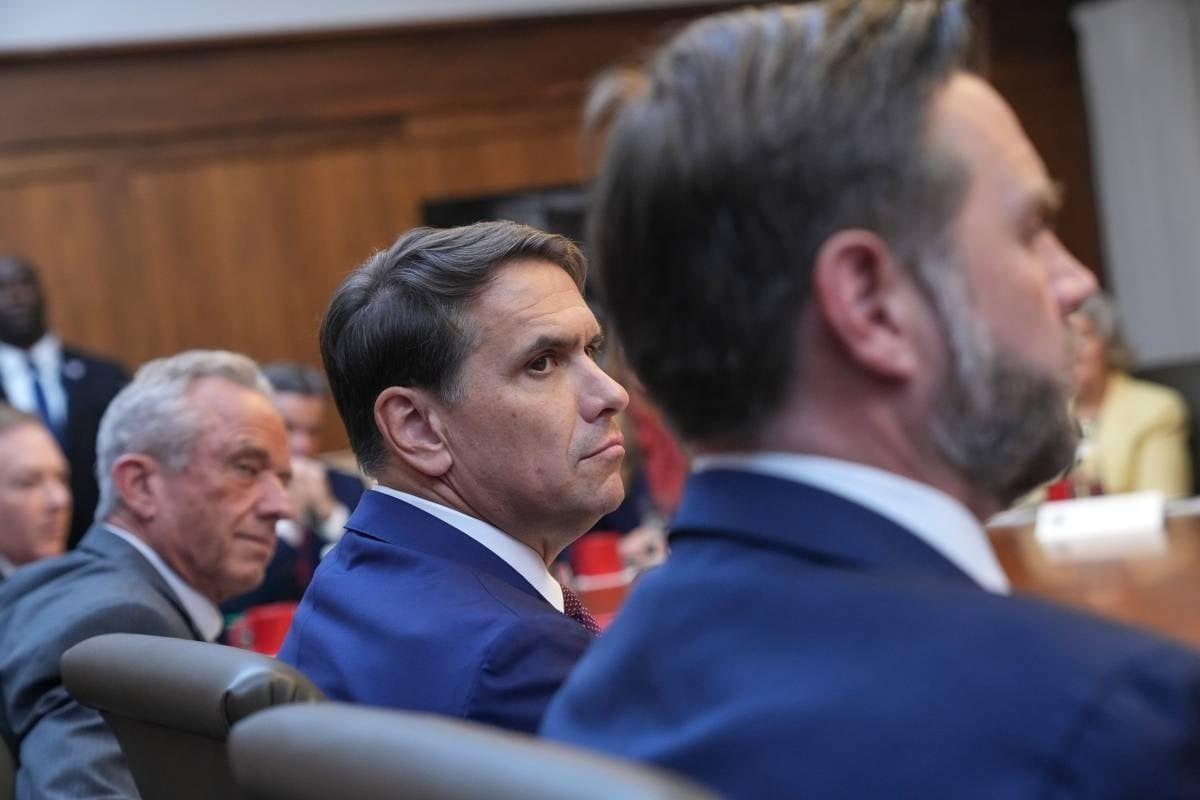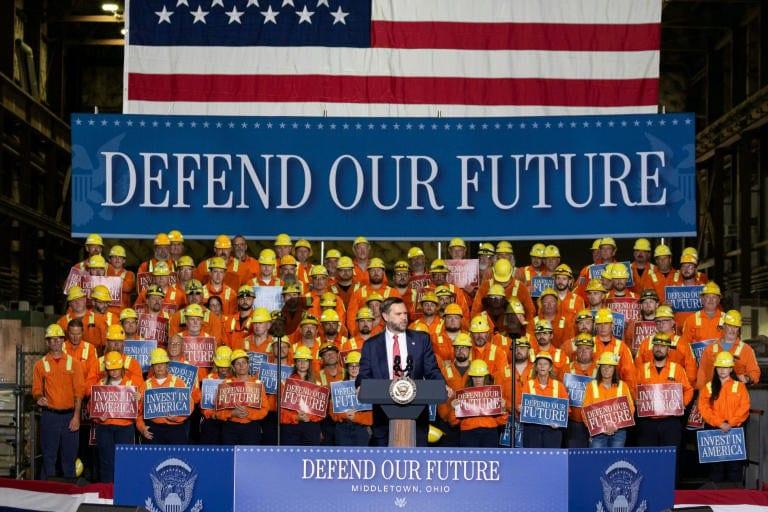
US Vice President JD Vance returned to his hometown of Middletown, Ohio, on Friday to campaign for Republican candidates in the crucial November midterm elections. Vance used the visit to subtly test his own political future, with an eye on potentially succeeding President Donald Trump in the 2028 presidential election.
Campaigning in Hometown
Vance delivered a speech at the Middletown steel plant where his grandfather worked for 40 years. The blue-collar town features prominently in Vance's bestselling 2016 memoir, 'Hillbilly Elegy,' which recounts his impoverished upbringing in the neglected rust belt. This region was a key factor in Trump's 'Make America Great Again' movement, which Vance needs to appeal to if he plans to run for the White House in two years.
During his speech, Vance took a subtly centrist tone, reminiscing about his blue-collar roots while avoiding the harsh rhetoric that has made Trump so divisive. He emphasized his grandfather's 'very simple' expectations, including the notion that 'America never be asked to be the policeman of the world.'
Political Positioning and Future Prospects
Vance's visit comes amid concerns that Trump's declining popularity—with an approval rating of 33 percent according to a recent Reuters/Ipsos poll—could lead to Republican losses in the midterm elections. Vance sought to boost Republican candidates while positioning himself as a potential successor to Trump.
Although Vance has not formally confirmed his candidacy for 2028, he has been positioning himself as the heir to Trump's MAGA movement, minus the rough edges. His potential rival within the Republican party, US Secretary of State Marco Rubio, has indicated he will not run if Vance does. However, a recent poll by Emerson College and The Hill found that Rubio outperformed Vance in most match-ups against leading Democratic contenders.
The Democratic Party, meanwhile, is grappling with its own challenges following Trump's 2024 defeat of then-Vice President Kamala Harris. The far-left wing of the party has been gaining ground in recent primary elections, while centrists are seeking to distance themselves from socialist-style proposals like universal health care.