In a striking adaptation of Homer's Odyssey, Ukraine's Azov military corps has crafted a theatrical performance that merges ancient myth with the contemporary realities of war. This production, staged in Kyiv, transforms the classic epic into a poignant reflection of Ukraine's ongoing struggle against Russian invasion. The play, a collaboration between the Ivan Franko Theatre and the Azov military corps, is written and performed by Azov service members, with proceeds supporting prisoners of war.
A Modern Myth
The adaptation draws heavily on the themes of longing and homecoming that are central to Homer's Odyssey. In this version, Penelope, played by Darya Legeyda, uses plastic grocery bags to fend off a suitor, symbolizing the everyday struggles faced by Ukrainians. An attack drone flies over the stage, chasing a soldier, while Odysseus, portrayed by Danylo Mireshkin, demands battlefield updates over a radio. The play's director, Ivan Uryvskyi, emphasizes that this is not a retelling of Homer's work but a new narrative inspired by its themes. 'We are not doing Homer, that's very important. Our Odyssey is about our heroes, though we draw on archaic, mythical, and profoundly significant themes,' says Legeyda.
Resonance and Resistance
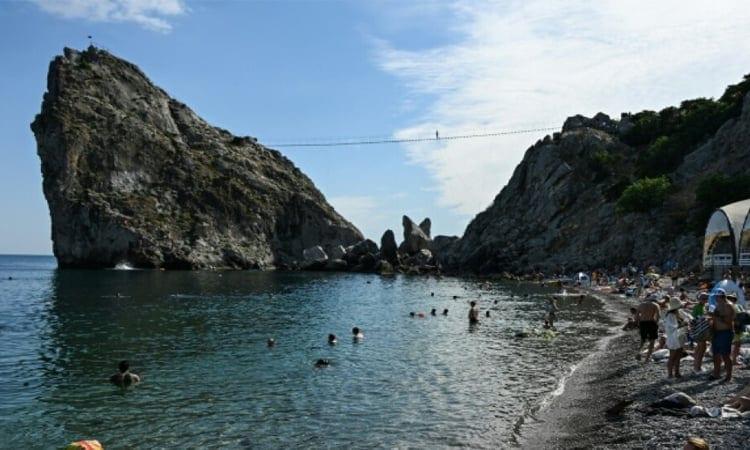
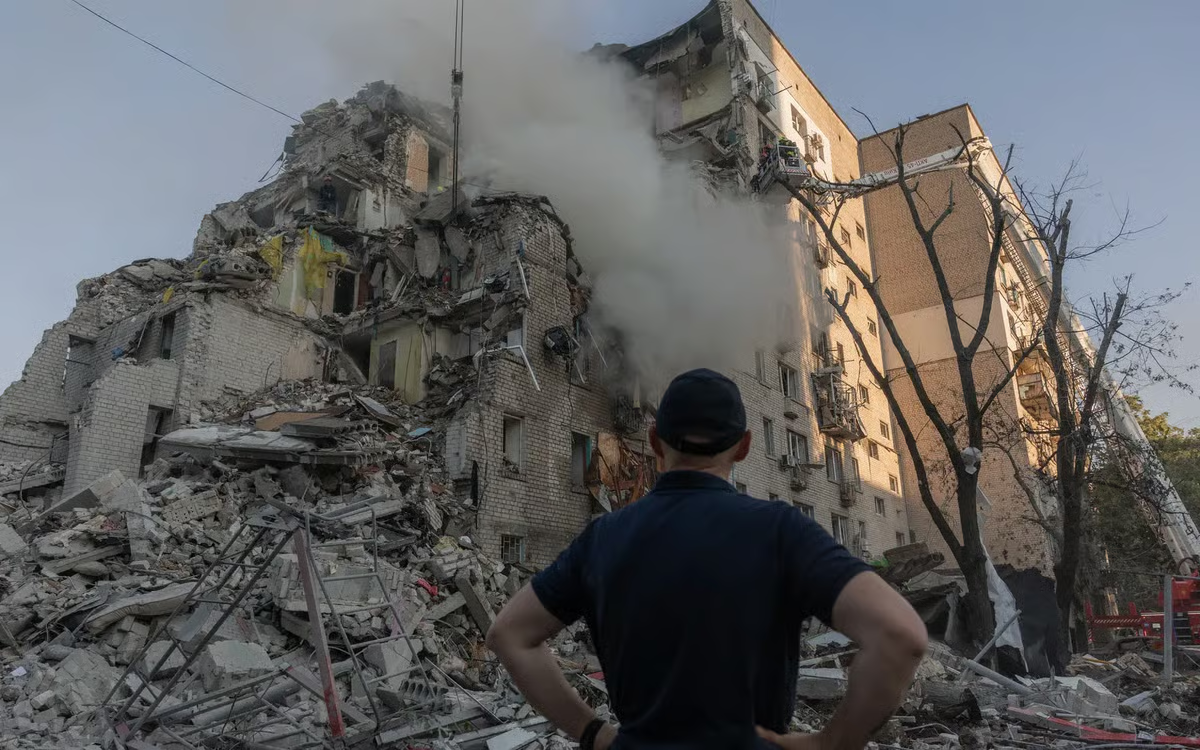
The longing for home at the heart of Homer's Odyssey resonates deeply in Ukraine, where Russia's invasion has displaced millions and sent hundreds of thousands to fight, with tens of thousands still missing or held captive. The play's setting on the Maeotis, the ancient name for the Sea of Azov, underscores the unit's connection to Mariupol, a city occupied by Russia since 2022. The Azov unit, once a fringe battalion with far-right roots, has become a national symbol of resistance after its fighters were among the last to hold out during the siege of Mariupol in 2022.
The play includes scenes that recall the 2022 siege, such as Odysseus negotiating with a camouflage-clad Cyclops, a nod to the negotiations between Azov commander Denys Prokopenko and a Russian counterpart. Despite their surrender, hundreds of Azov fighters remain captive, and Moscow has used their trials to reinforce its disputed claims that the invasion aims to 'denazify' Ukraine. Meanwhile, Ukrainians hold weekly rallies demanding the release of Azov fighters.
The adaptation also addresses the personal toll of war. In one scene, Odysseus meets his deceased mother in the realm of the dead and confesses his guilt over failing to retrieve the body of his comrade Elpenor. This mirrors the anguish felt by Ukraine's soldiers, including lead actor Danylo Mireshkin, who serves with Azov. 'This was the hardest part: reliving this experience again and again,' Mireshkin says. 'It's a sacred duty: always retrieve the wounded, the fallen. But it doesn't always work out.'
The play leaves the audience with an ambiguous ending, reflecting the uncertain futures faced by many Ukrainians. 'Maybe, we won't have a happy ending in the classical sense,' says Legeyda. 'Perhaps we need to talk about it. And cry about it. And live on.' This version of the Odyssey does not confirm if Odysseus returns home, mirroring the real-life struggles of those awaiting news of their loved ones.