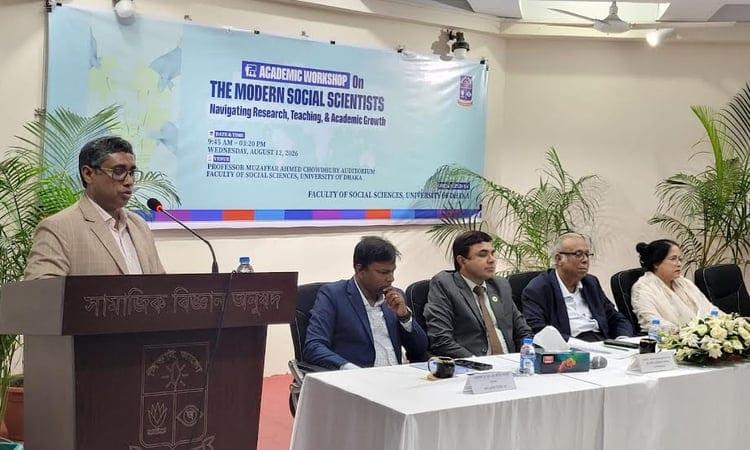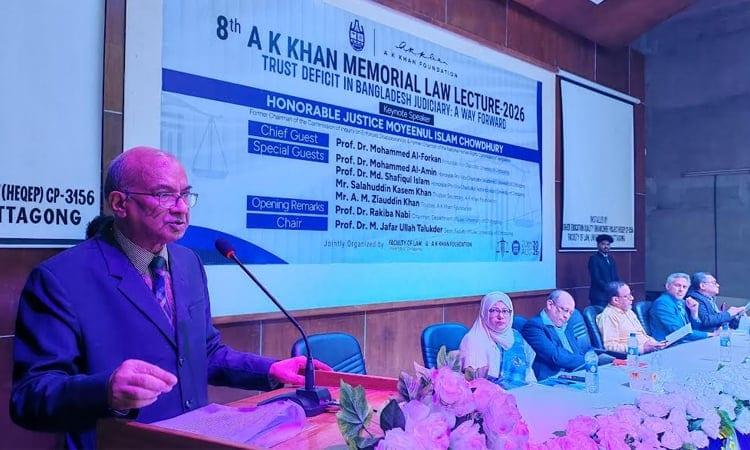
Deputy Speaker Barrister Kayser Kamal has underscored the importance of studying history, stating it is essential for understanding a nation’s identity and shaping its future. He made these remarks while addressing the fresher’s reception of the 20th semester batch at the Department of History, Dhaka University, held at the Teacher-Student Centre (TSC).
Reflecting on Personal Journey
Recalling his own student days in the Department of History during the 1989-90 academic session, Kayser Kamal shared that returning to the TSC auditorium evoked cherished memories of his university life. He emphasized the profound impact the department had on his personal and professional growth, beyond mere academic knowledge.
History Beyond Textbooks
Addressing the new students, the Deputy Speaker highlighted that the study of history involves more than memorizing events. It teaches the reasons behind occurrences, their socio-political and economic contexts, and the lessons that can be applied to the future. He asserted, 'History is the mirror of a nation’s identity. A nation that does not know its history cannot confidently build its future.'
Developing Essential Skills
Kamal noted that history cultivates critical thinking, analytical skills, research aptitude, and the pursuit of truth—qualities vital for various professional fields including public administration, governance, judiciary, diplomacy, journalism, education, research, development, and corporate leadership.
Inspirational Legacy of Dhaka University
The Deputy Speaker praised the historic role of the University of Dhaka, often referred to as the Oxford of the East. He highlighted its contributions to Bangladesh’s democratic movements, secular values, and national liberation struggle, including the 1952 Language Movement, 1971 Liberation War, and the 1990 mass uprising.
Advice to Freshers
In his advice to the freshers, Kayser Kamal urged them to attend classes regularly, complete their studies on time, and embrace discipline and punctuality. He stressed that talent alone is insufficient; its proper development relies on perseverance, honesty, discipline, and hard work. He also encouraged students to practice tolerance, mutual respect, free thinking, and human values throughout their university life.