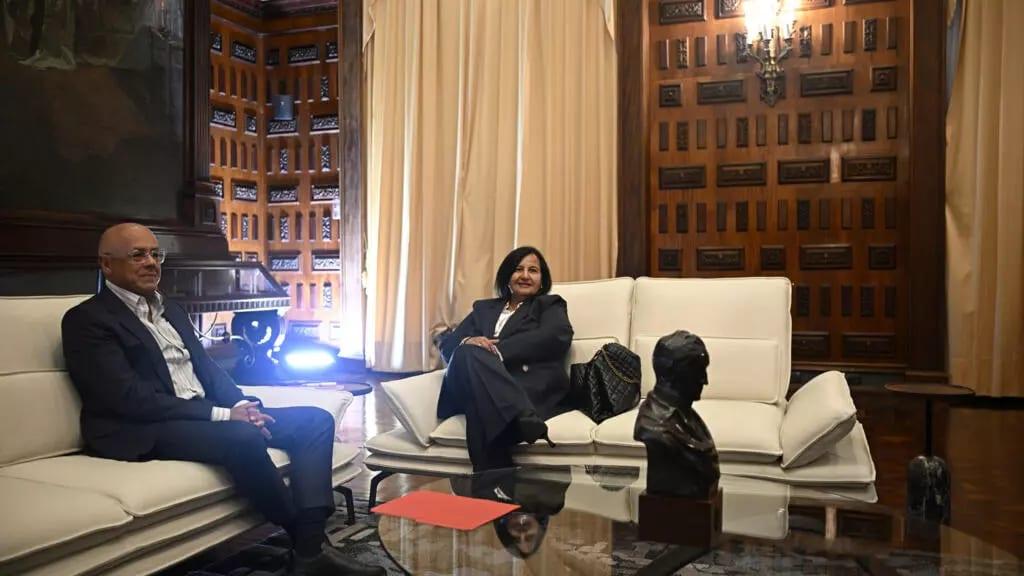
Political transition talks in Venezuela will begin in person next week in Caracas, the government and the opposition announced Saturday. The negotiations aim to address assistance for earthquake victims, reinforce democracy, and ensure political rights. The talks are backed by the United States, focusing on rebuilding democratic institutions and strengthening the electorate.
Background and Context
Venezuela, with the world's largest proven oil reserves, has faced significant economic and political challenges. The country has been in flux since US forces deposed President Nicolas Maduro in January, leading to interim leader Delcy Rodriguez governing under Washington's watchful eye. Devastating earthquakes last month killed over 5,500 people, further complicating the situation.
Key Participants and Agenda
Jorge Rodriguez, the head of the National Assembly and chief government negotiator, and opposition figure Dinorah Figuera have established a working agenda with clear objectives. The first meeting will focus on earthquake relief, reinforcing democracy, and political rights. The government team includes former foreign minister Jorge Arreaza, while Figuera leads the opposition bloc that won a legislative majority in 2015, backed by Washington but rejected by Maduro.
The transition talks are supported by the United States, which aims to focus on rebuilding democratic institutions, strengthening the electorate, and guaranteeing political participation. Observers hope the talks will result in a calendar for new elections. However, leftist Chavistas, supporters of Maduro's late mentor Hugo Chavez, remain distrustful of a process that includes US-approved representatives.
Nobel Peace Prize-winning opposition figure Maria Corina Machado, an exiled political ally of the opposition's Edmundo Gonzalez Urrutia, has pledged to return to Venezuela but was not invited to the talks. Machado, based in Panama, has expressed support for the negotiations. Figuera thanked the US government and US Secretary of State Marco Rubio for Washington's support for the transition.