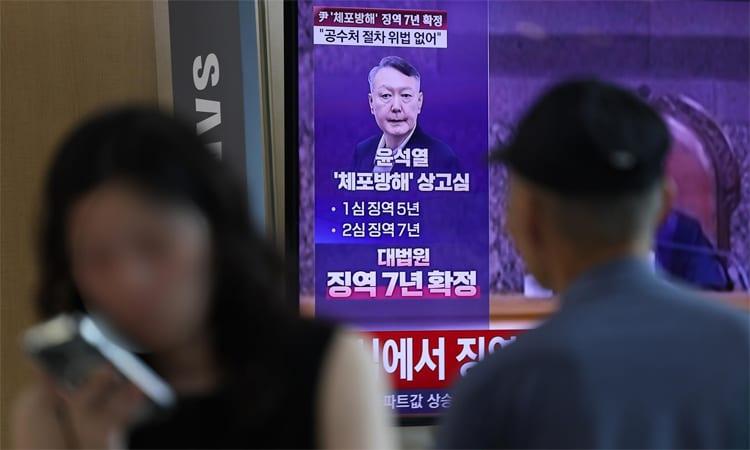
South Korea's Supreme Court has upheld the seven-year prison sentence for former president Yoon Suk Yeol, who was convicted over his botched 2024 martial law declaration and the chaotic aftermath. The ruling brings to an end a series of appeals by both prosecutors and Yoon's legal team.
Background of the Case
Yoon was accused of obstructing cabinet deliberations and using forged signatures of the prime minister in the lead-up to his 2024 martial law declaration. He was also charged with using presidential security agents to block his own arrest after lawmakers nullified the declaration. The martial law, which lasted only about six hours, triggered protests, sent the stock market plunging, and caught key allies like the United States off-guard.
Court's Decision
In January, a lower court had sentenced Yoon to five years in prison after convicting him on most charges. In April, an appeals court upheld the ruling, added a guilty verdict over the misleading press release, and raised the sentence to seven years. The Supreme Court dismissed all appeals, stating that the lower court's judgment 'contained no errors.'
Yoon's Response
Yoon's legal team expressed 'deep regret' and accused the Supreme Court of concluding the case 'without sufficient deliberation.' They plan to challenge the ruling on constitutional grounds and raise a complaint.
Political Impact
Yoon's martial law declaration in December 2024 plunged South Korea into an unprecedented political crisis. He was ousted in April 2025, triggering elections that gave the presidency to Lee Jae Myung of the centre-left Democratic Party.
Significance for Bangladesh
The ruling underscores the importance of adhering to constitutional processes and the rule of law, even in times of crisis. It serves as a reminder for leaders to act within their legal boundaries to maintain stability and order.