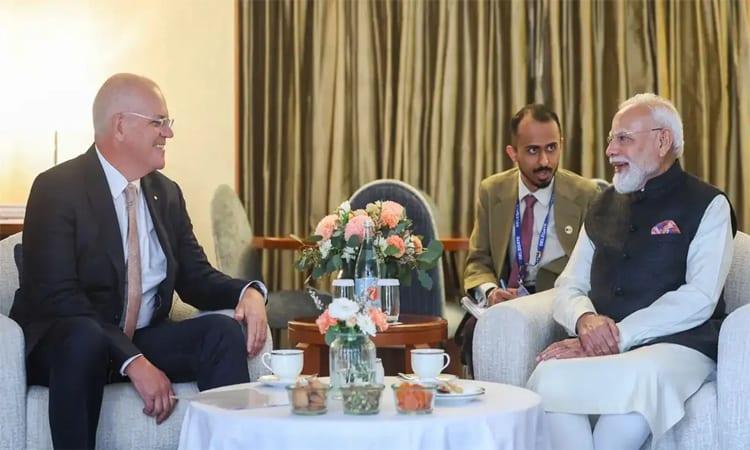
Indian Prime Minister Narendra Modi has secured a crucial agreement for uranium supply from Australia during his visit, marking a significant step towards India's nuclear energy ambitions. The agreement, signed with Australian Prime Minister Anthony Albanese, aims to facilitate long-term uranium exports for 'exclusively peaceful purposes' under International Atomic Energy Agency safeguards.
Strategic Importance for India
India, the world's most populous nation, faces an almost-insatiable appetite for electricity. Modi has outlined plans to substantially scale-up nuclear power generation to meet this demand. Australia, which holds around 28 percent of the world's uranium resources, will play a vital role in supporting India's clean energy objectives.
Overcoming Legal and Political Hurdles
Despite a nuclear cooperation agreement signed in 2015, legal hurdles and political sensitivities have previously hindered uranium exports to India. This new arrangement is expected to overcome these obstacles, paving the way for increased non-fossil fuel power capacity in India.
Growing Indian Diaspora in Australia
The agreement comes amid a substantial growth of Australia's Indian diaspora, which has become the largest overseas-born community in the country, surpassing the British community. Modi is expected to receive a warm welcome at a community rally in Melbourne, although his visit has also sparked protests over concerns about Hindu nationalism and minority persecution in India.
Significance for Bangladesh
This agreement underscores the growing strategic partnership between India and Australia, with implications for regional energy dynamics. For Bangladesh, it highlights the importance of diversifying energy sources and the potential for similar agreements to support its own energy needs and regional stability.