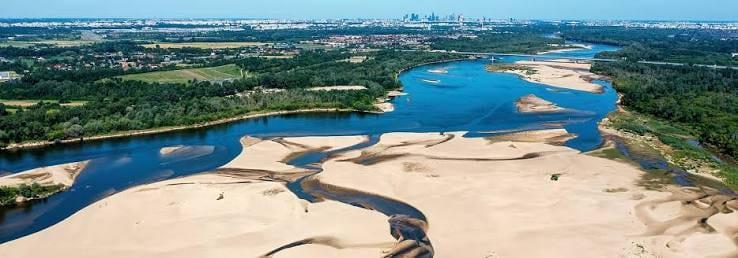
On August 10, 2026, Poland's longest river, the Vistula, hit a record low water level in Warsaw, matching a previous record set in the same month, according to the national meteorological institute IMGW.
Record Low Water Levels
The Vistula River, which flows through the heart of Poland, has experienced a significant drop in water levels. The latest measurements show the river's level at 102 centimeters (40 inches), identical to a record set just days earlier. This phenomenon comes as Europe grapples with multiple heatwaves, exacerbating water scarcity issues.
Impact of Heatwaves
The European heatwaves have played a crucial role in lowering the river's water levels. The sustained high temperatures have led to increased evaporation rates and reduced precipitation, significantly impacting water bodies across the continent.
Historical Context
This is not the first time the Vistula River has faced such low levels. Records indicate that similar conditions occurred in the past, but the frequency and severity of these events are raising concerns among environmentalists and policymakers.
Implications for Warsaw
The low water levels pose several challenges for the city of Warsaw. Water supply, transportation, and ecological balance are all affected. Authorities are monitoring the situation closely to mitigate potential impacts.
Why This Matters for Bangladesh
While the Vistula River's situation is specific to Poland, it highlights broader issues of water scarcity and climate change affecting regions worldwide, including Bangladesh. Understanding these global trends can help inform local water management strategies.