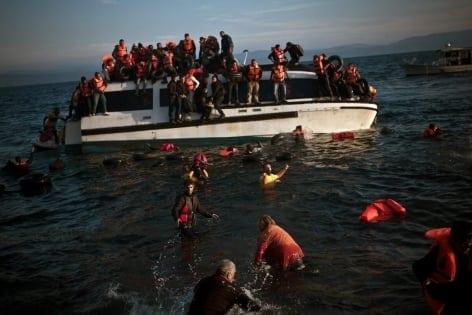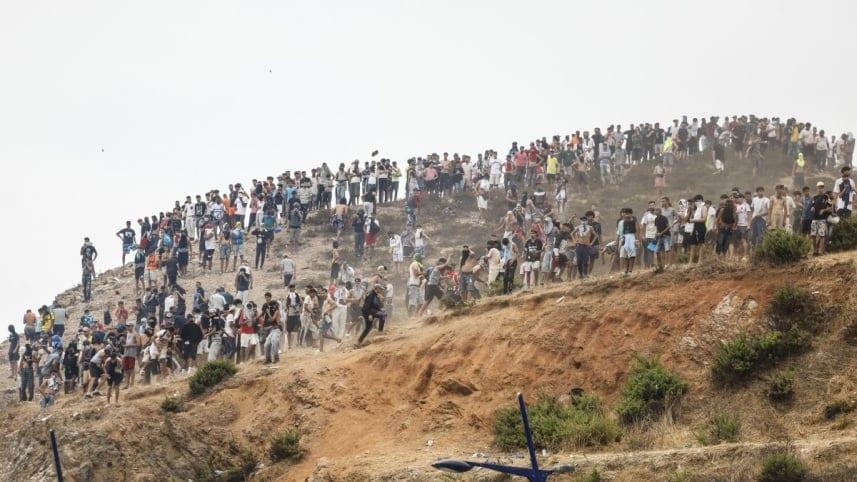
In the span of less than three days, 60,000 migrants entered the Spanish enclave of Ceuta, a territory of 84,000 residents, according to Ceuta's top official Juan Jesus Vivas. This sudden influx has triggered a political crisis in Madrid and other European capitals. The Spanish interior ministry reported that over 48,000 of these migrants had returned to Morocco, while 34 people died attempting to reach Ceuta.
This influx is significantly larger than the previous event in May 2021, when around 12,000 migrants crossed into Ceuta in a few days. Ignacio Cembrero, a Spanish journalist specialized in North African migration, suggested that Moroccan security forces appeared to have been "sitting on their hands" during the event. Cembrero noted that despite the presence of police and auxiliary forces, the migrants were allowed through.
One possible reason for this influx could be Spain's Supreme Court ruling on July 8, which stated that migrants arriving by sea should not be returned as quickly as others. Cembrero believes this ruling played a role but does not fully explain the scale of the mobilization. Other analysts suggest that Spain's relatively open migration policy might have contributed to the situation.
Some analysts argue that Morocco is using the migration issue as a tool of diplomatic pressure. Morocco has long claimed sovereignty over Ceuta and Melilla, a claim Spain has consistently rejected. Cembrero believes Morocco saw an opportunity to force Spain into negotiations.
The crisis has led to immediate reactions from other European countries. Italy announced the temporary suspension of Schengen rules allowing border-free travel with Spain, a decision criticized by Madrid. France and Britain expressed solidarity with Spain, while France announced it would increase police presence at its Spain border five-fold. Portugal also said it would enhance controls at its southern borders.