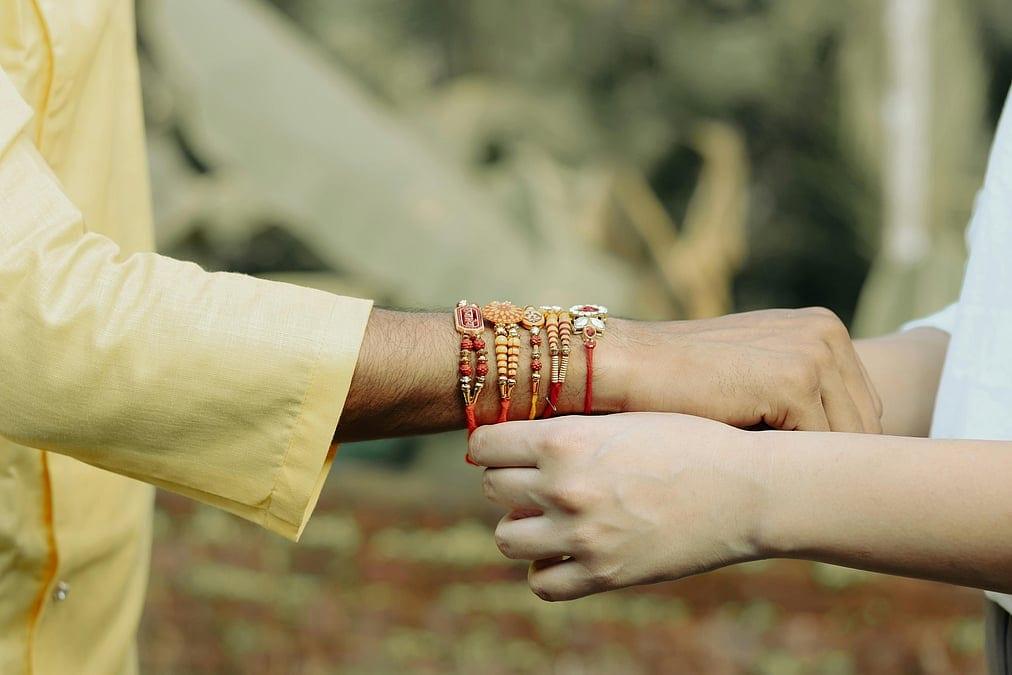
Rakhi Bandhan, a festival that transcends religious and cultural boundaries, celebrates the profound bond of brotherhood and unity. Originating from ancient traditions, it symbolizes the timeless connection between siblings and the broader human community.
Historical Roots and Legends
The festival has deep historical roots, with legends from Indian mythology illustrating its significance. In the Vishnu Purana, Lakshmi ties a rakhi on Bali's wrist to save Vishnu. Similarly, in the Mahabharata, Draupadi ties a rakhi on Krishna's wrist to stop his bleeding, fostering a brother-sister bond.
Modern Significance
In modern times, Rakhi Bandhan has evolved to represent unity beyond familial ties. During the 1905 Bengal Partition protests, Rabindranath Tagore called for Hindus and Muslims to tie rakhis on each other's wrists, promoting brotherhood and solidarity. Today, the festival is celebrated by people of various faiths, reinforcing the message of unity and harmony.