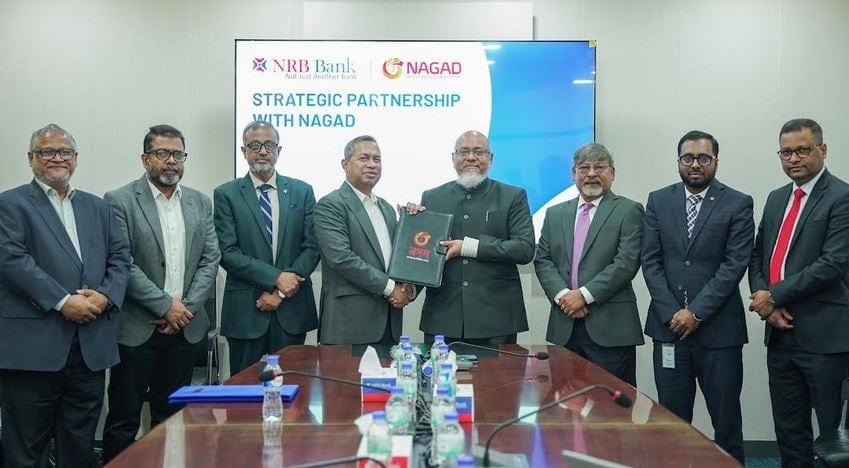
Nagad, the mobile financial service of the Bangladesh Postal Department, has entered into a strategic partnership with NRB Bank PLC to enhance financial services for customers. The agreement, signed at NRB Bank's corporate head office in Gulshan, Dhaka, aims to leverage Nagad's platform to extend services to remote areas where the bank lacks physical branches.
Expanding Financial Services to Remote Areas
Under this partnership, NRB Bank will utilize Nagad's extensive network of over 300,000 agent points to offer services in remote regions. This collaboration is expected to significantly broaden the operational scope of NRB Bank, making it easier for customers in underserved areas to access banking services.
Enhanced Remittance Services and Digital Initiatives
One of the key features of this partnership is the instant delivery of inward foreign remittances sent through NRB Bank to beneficiaries' Nagad wallets. This means that recipients across the country can receive and use remitted funds 24/7. Additionally, both institutions plan to expand services including nano-loans and corporate collection services.
Commitment to Digitalization and Economic Growth
Nagad has been actively promoting digital transactions and legal remittance channels. Recently, under a campaign titled "Har Na Mana Har", Nagad offered foreign remittance recipients the chance to win gold necklaces. Furthermore, Nagad has expanded cashless transaction capabilities by launching "Bangla QR" payments and integrating with the National Payment Switch Bangladesh (NPSB), enabling users to make payments at 10 lakh Bangla QR merchant outlets nationwide via the Nagad app.
Why This Matters for Bangladesh
This partnership between Nagad and NRB Bank is a significant step towards modernizing traditional banking transactions and promoting financial inclusion in Bangladesh. By leveraging Nagad's extensive network, NRB Bank can reach remote areas more effectively, thereby boosting trade and commerce across the country. This initiative is expected to contribute positively to the national economy by enhancing access to financial services and encouraging digital transactions.