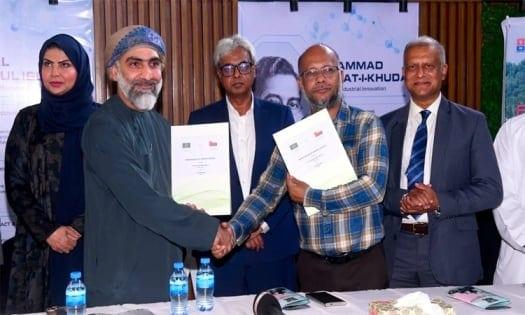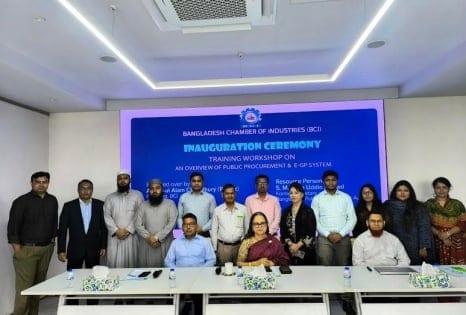
The government is aiming to include private bank employees in the universal pension scheme by 2030. Currently, private bank employees do not receive any pension benefits. To address this, the government has selected a suitable program named 'Progoti' for them. This decision was made during a review meeting held at the Secretariat in Dhaka, chaired by the Secretary of the Financial Institutions Division of the Ministry of Finance, Nazma Mobarak. Representatives from Bangladesh Bank and managing directors of various banks attended the meeting. The National Pension Authority's Executive Chairman, Mo. Suratuzzaman, presented a paper, and the Assistant General Manager of the National Pension Authority, Ayesha Hoq, moderated the event.
The Ministry of Finance announced in a notification that the meeting called upon the banking sector to play a role in achieving the goal of bringing at least one member from nearly 40 million families under the universal pension scheme by 2030. It was decided that the managing directors of the banks would take necessary steps to include their officers and employees in the 'Progoti' scheme.
Secretary Nazma Mobarak stated that state-owned banks must establish separate desks for the universal pension scheme in all branches. Additionally, banners should be displayed, and the issue should be included in the banks' own marketing activities. Private banks must take necessary initiatives to bring all their officers and employees under the 'Progoti' scheme.
The current government's election manifesto includes a commitment to form a pension fund to ensure financial security for individuals employed in the private sector during their old age. The presentation noted that a significant portion of the approximately 18 million registered workers and employees in the private sector are not covered by any post-retirement financial security. While government employees are covered by pension schemes, such institutional arrangements are absent in the private sector. The 'Progoti' scheme under the universal pension system, launched in 2023, aims to fill this gap with an effective and sustainable solution for private sector employees.
The meeting discussed making the 'Progoti' scheme more attractive by introducing a Shariah-based pension scheme, considering lifetime pension benefits for nominees, and including bank outsourcing employees in the scheme. The 'Progoti' scheme is specifically designed for owners and employees of private institutions. When an institution joins the scheme, 50% of the monthly subscription is borne by the employee and the remaining 50% by the institution. The monthly subscription amount ranges from 1,000 to 15,000 Taka. Participants will receive lifetime monthly pension benefits upon retirement. There is also an income tax exemption on the subscription, and the pension is tax-free. Participants can withdraw up to 30% as a lump-sum gratuity after turning 60. The investment is backed by a government guarantee.
As of May 30, the total number of registered members in the four schemes—Progoti, Probash, Surokkha, and Samoto—stood at 377,930. The total deposit amount was approximately 260 crore Taka, which has now grown to 286 crore Taka with profits. The National Pension Authority has signed memorandums of understanding with 48 banks and financial institutions, of which 24 banks are actively collecting pension scheme subscriptions.