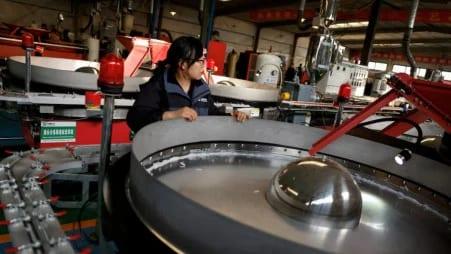
China's factory activity contracted in July, with the manufacturing purchasing managers' index (PMI) falling to 49.2, according to data released by the National Bureau of Statistics. This marks a significant drop from June's reading of 50.3 and is well below the 50.1 expansion forecast by Bloomberg. The contraction indicates a decline in industrial health and highlights the struggles of the world's second-largest economy to stimulate domestic demand.
FAQs
- **What does the PMI reading indicate?** The PMI reading of 49.2 indicates a contraction in China's manufacturing sector, as any figure below 50 suggests a decline in activity. - **Why did the PMI miss forecasts?** The contraction in factory activity was influenced by global uncertainties, including the Middle East war driving up energy prices, and weak domestic consumption. - **How is the non-manufacturing sector performing?** The non-manufacturing PMI fell sharply to 49.0 in July, indicating a significant decline in sectors like services and construction. - **What steps is the Chinese government taking to address these challenges?** President Xi Jinping has acknowledged the economic difficulties and emphasized the need to enhance macroeconomic policies and tap into domestic demand potential.