The Pulse Today
BREAKING
Sajib Pledges Aid for 50,000 Flood-Affected People in SonargaonMP Azharul Islam Mannan Distributes Relief Funds to Needy Families in SonargaonParliament Proposes Anti-Gambling Bill with Maximum 7-Year Prison PenaltyOpenAI Unveils 'Schedule' Feature to Boost Task Management in AI ChatbotPrime Minister Tareq Rahman Arrives in Dalian, China for Economic ForumEurope Confronts Intense Heatwave; Conditions Predicted to DeteriorateGold Prices Rise Again in Bangladesh Amid Global Market IncreaseSpaceX's Nasdaq Debut Values Company at Over $2 Trillion, Surpassing AmazonStudy Reveals AI Data Centers Contribute to Local Temperature IncreasesNarayanganj BNP Youth Wing Holds Rally to Welcome New Central CommitteeBangladesh Establishes Expert Committee to Formulate New Pesticide PolicyBangladesh Bank Releases Unified EDF Circular, Transitions to SOFR-Based PricingBangladesh Investigates Interoperable Payments to Lower Remittance CostsGovernment Pledges Enhanced Foreign Investment and Improved Business Climate: Mahdi AminRangpur Police Nab Two Suspects, Recover Stolen Motorcycles in MithapukurBangladesh UGC Finalizes Five-Year Plan to Elevate Higher EducationNative Fish Repopulate Patuakhali Sanctuaries, Boosting Local Fishing CommunitiesRCC and RWASA Collaborate for Rajshahi's Sustainable Urban DevelopmentPM's Aide Urges Enhanced Climate Action Capacity and Collaboration in BangladeshIndia's Gen Z Protests Demand Education Reforms and Accountability from ModiBangladesh's FIDE Master Tahsin Tajwar Zia Places 50th in Serbia Open MastersLife Sentence for Man Convicted of Raping Schoolgirl in FaridpurBangladesh to Play Historic One-Off Test Against England at Lord's in 2027JU Chhatra Dal Demands Investigation into Alleged Medicine Embezzlement at Medical CentreFinance Minister Highlights Critical Role of Effective Budget Implementation for National Success

Bangladesh Investigates Interoperable Payments to Lower Remittance Costs

A new research initiative seeks to leverage interoperable digital payments to reduce remittance costs and enhance financial inclusion in Bangladesh.

By Staff Correspondent
Share
Interoperable digital payments to reduce remittance costs explored  | Business
BSS

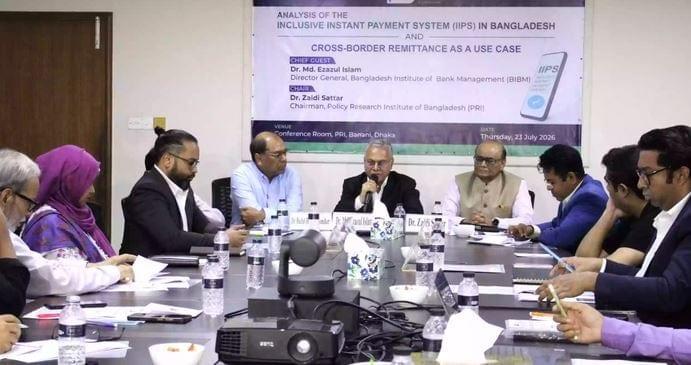
The Policy Research Institute of Bangladesh (PRI), with support from the Gates Foundation, has launched a research initiative to explore how an Inclusive Instant Payment System (IIPS) could lower remittance costs and promote formal financial channels. The initiative aims to create an interoperable, affordable, and accessible payment ecosystem connecting banks, mobile financial service providers, and other financial institutions.

FAQs

What is the Inclusive Instant Payment System (IIPS)?

The IIPS is an initiative aimed at creating an interoperable digital payment ecosystem that connects various financial institutions, including banks and mobile financial service providers, to facilitate affordable and accessible payments.

Why is reducing remittance costs important for Bangladesh?

Remittances account for around 6 percent of Bangladesh's GDP. Reducing costs and encouraging the use of formal financial channels can channel these inflows into productive investments and reduce reliance on informal transfer methods.

What are the key components of the research initiative?

The research will assess Bangladesh's payment infrastructure, regulatory framework, market incentives, and user behavior. It will also conduct a survey of Bangladeshi migrants to understand their remittance channel preferences.

What are the expected benefits of the IIPS?

The IIPS is expected to reduce digital payment costs, expand financial inclusion, improve transaction transparency, and enhance the efficiency and competitiveness of Bangladesh's payment ecosystem.

Terms in this story

Source: BSS

FAQ

What is the Inclusive Instant Payment System (IIPS)?
The IIPS is an initiative aimed at creating an interoperable digital payment ecosystem that connects various financial institutions, including banks and mobile financial service providers, to facilitate affordable and accessible payments.
Why is reducing remittance costs important for Bangladesh?
Remittances account for around 6 percent of Bangladesh's GDP. Reducing costs and encouraging the use of formal financial channels can channel these inflows into productive investments and reduce reliance on informal transfer methods.
What are the key components of the research initiative?
The research will assess Bangladesh's payment infrastructure, regulatory framework, market incentives, and user behavior. It will also conduct a survey of Bangladeshi migrants to understand their remittance channel preferences.
What are the expected benefits of the IIPS?
The IIPS is expected to reduce digital payment costs, expand financial inclusion, improve transaction transparency, and enhance the efficiency and competitiveness of Bangladesh's payment ecosystem.

Topics

Comments

More in business

See all →

Latest stories