Bangladesh's youth-led environmental initiative 'Mission Green Bangladesh' has earned international recognition for its nationwide 'Tree Plantation in 64 Districts' campaign. The United Nations Environment Programme (UNEP) formally acknowledged the initiative as part of World Environment Day celebrations, citing its outstanding contribution to environmental conservation and climate change mitigation. This achievement marks not only a milestone for Mission Green Bangladesh but also a significant recognition for the country's broader efforts in tackling climate challenges and advancing sustainable development.
The campaign mobilized young volunteers across all districts to plant and preserve native species, while raising climate awareness among local communities. Organizers expressed gratitude to partner institutions including Bangladesh Environmental Lawyers Association (BELA), Center for Climate Change and Environmental Research (C3ER)-BRAC University, Waterkeepers Bangladesh, Center for Atmospheric Pollution Studies (CAPS), Society for Asian Circular Innovation Network, Swapnopuri Welfare Organization, Project Management Institute (PMI), and Sustainable Research and Consultancy Ltd. (SRCL).
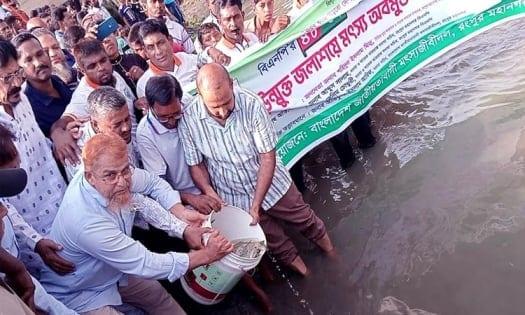
Mission Green Bangladesh Executive Director Ahsan Rony said, 'This UNEP recognition has increased our responsibility. Our journey to build a sustainable green Bangladesh will continue. Without the tireless efforts of thousands of volunteers, citizens, and partner organizations nationwide, this achievement would not have been possible. This success belongs to everyone.' On June 5, marking World Environment Day, the platform organized an unprecedented green campaign across the country. More than 4,000 volunteers from over 100 national and local environmental organizations participated in day-long tree plantation drives, human chains demanding environmental protection, and awareness programs in all 64 districts.
The campaign also featured public outreach activities such as distributing leaflets, staging human chains with placards, and citizen engagement in district levels to highlight issues of air pollution, climate change, and environmental conservation. Organizers said that the program is not limited to a single day but has evolved into a year-round civic movement for nurturing and preserving saplings. Trees were planted in schools, colleges, religious institutions, households, and other locations suitable for long-term care.
Besides, fruit and forest saplings were distributed free of cost to underprivileged families as part of the initiative's community-based environmental approach.