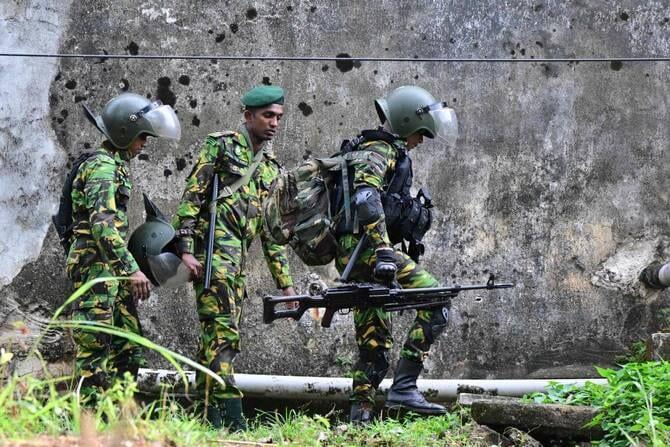
Sri Lanka sent in hundreds of troops and elite commandos on Sunday to quell a riot at Mahara Prison, where an inmate was killed and six others injured, according to police. The prison, located just outside the capital Colombo, has been overwhelmed by inmates who destroyed multiple buildings, including the kitchen, hospital, and vocational training facilities. This incident comes nearly a month after another prison riot in the same region, which resulted in the deaths of 10 guards and 21 inmates. Authorities have announced plans to convert disused state buildings into prisons to address the chronic overcrowding.
Deputy Police Inspector-General Sanjeewa Medawatte confirmed that the situation is now under control and that reinforcements from the armed forces and Special Task Force commandos were essential in restoring order. Medawatte reported that the inmates had completely destroyed critical infrastructure within the prison, highlighting the urgent need for reform in the country's prison system.
Mahara Prison currently houses 4,100 inmates, about four times its intended capacity, reflecting a widespread issue across Sri Lanka's jails. Over three-quarters of the inmates are remand prisoners awaiting trial, many held on drug-related charges. This overpopulation exacerbates the challenges faced by prison authorities.
The recent unrest at Mahara Prison is reminiscent of a riot in November 2020, where 11 inmates were killed and nearly 120 injured. Addressing the root causes of these outbreaks is crucial for preventing future incidents. The authorities' recent announcement to convert disused state buildings into prisons aims to alleviate the overcrowding issue.
The situation in Sri Lanka's prisons underscores the need for systemic reforms to ensure the safety and well-being of both inmates and staff. These developments also have implications for neighboring countries, including Bangladesh, which shares similar challenges in managing its prison populations.