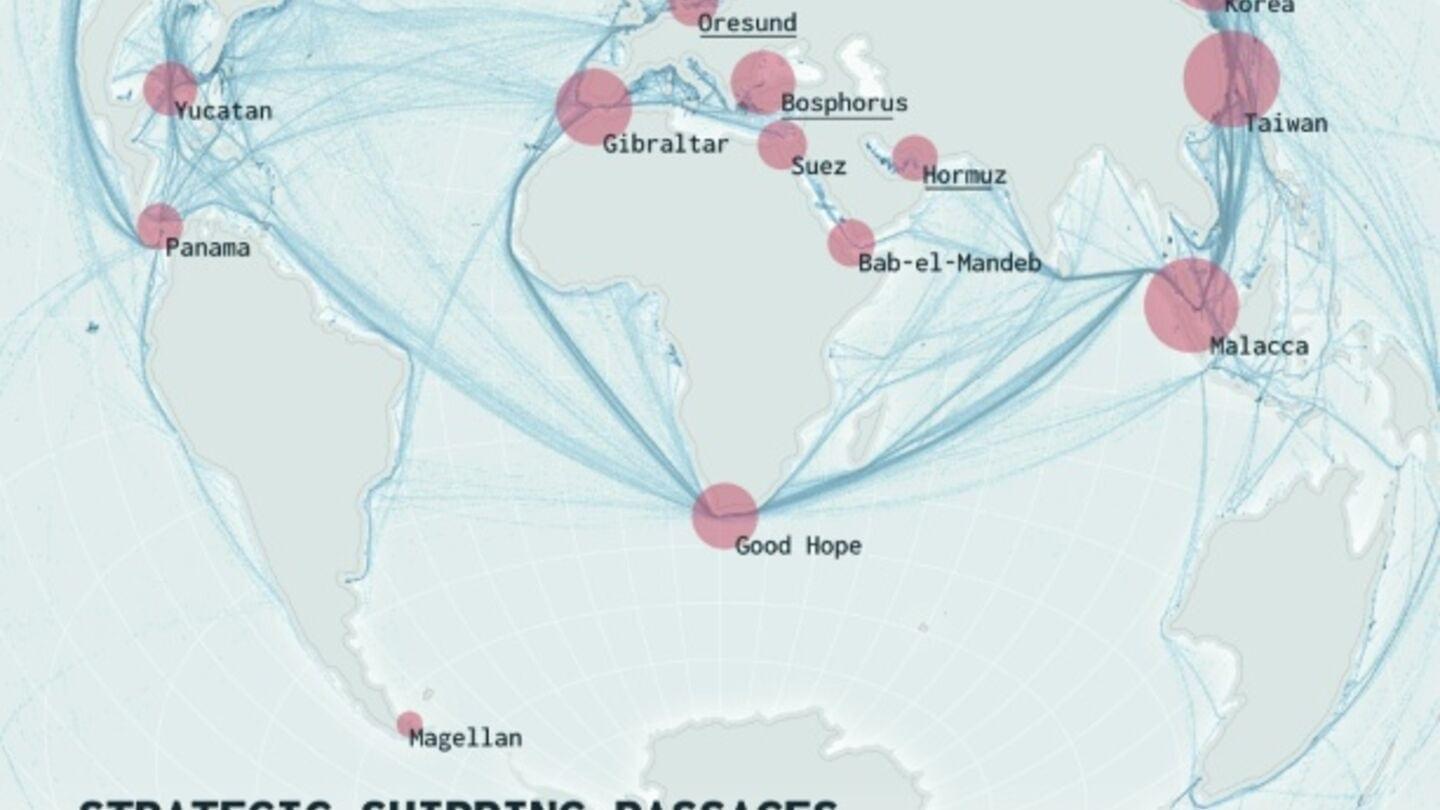
The Strait of Hormuz, a narrow waterway connecting the Persian Gulf to the Gulf of Oman, has long been a focal point of geopolitical tension. As Iran tightens its grip on Hormuz, its Yemeni allies, the Houthi rebels, aim to disrupt shipping in the Red Sea, potentially affecting traffic in another critical passage, Bab el-Mandeb. These straits, along with others like Malacca, are vital for international trade, through which oil, gas, and various goods pass. The United Nations Convention on the Law of the Sea ensures the principle of free navigation through these natural corridors, contrasting with man-made canals like Suez and Panama, which may levy tolls.
Sylvain Domergue, a lecturer at Sciences Po Bordeaux, notes that the principle of free navigation through straits dates back to the early 17th century with Hugo Grotius' Mare Liberum thesis, which argued that the sea belongs to no one. This doctrine was later adopted by the Netherlands, Britain, and the United States, despite not ratifying the Montego Bay Convention. Britain's colonial strategy often hinged on controlling strategic waterways, such as establishing a naval base in Singapore to oversee the Strait of Malacca, through which a significant portion of global maritime traffic from China now passes.
The strategic importance of straits is evident in historical and contemporary contexts. The Danish straits (Oresund and Kattegat) were crucial in the 19th century for collecting tolls and blocking Russian access to the Atlantic. The Turkish Straits (Bosphorus and Dardanelles) continue to collect tolls under the 1936 Montreux Convention. Emerging issues involve the Taiwan Strait, where China's territorial ambitions and Taiwan's claims create tension, and the Strait of Malacca, where Singapore's status as a hub could be threatened by potential tolls.
The recent announcement by Iran to introduce a toll in Hormuz prompted the Malaysian prime minister to briefly consider a similar move for Malacca before backtracking. Domergue warns that such a toll could diminish Singapore's prominence in East Asia. The geopolitical dynamics surrounding these straits underscore their enduring significance in global trade and the potential for future conflicts.
The Legacy of Strategic Straits
The historical and contemporary importance of maritime straits like Hormuz and Malacca illustrates their role in shaping global trade and geopolitics. As nations vie for control and influence over these critical passages, the principles of free navigation and strategic dominance continue to collide, highlighting the intricate balance of power in international relations.