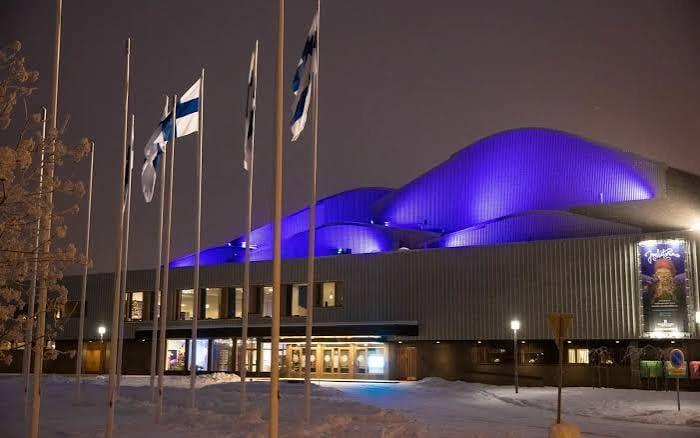
Finland has announced that it will host a European Union leaders' summit on the Arctic in the northern city of Rovaniemi in September. The summit, scheduled for September 13-14, aims to strengthen the EU's common strategic approach to the Arctic region, which has seen rising geopolitical tensions due to claims by US President Donald Trump on Greenland and China's Arctic navigation initiatives. Key EU leaders, including Germany's Chancellor Friedrich Merz, Polish Prime Minister Donald Tusk, and Danish Prime Minister Mette Frederiksen, are expected to attend, along with EU foreign policy chief Kaja Kallas and EU Council President Antonio Costa.
The Arctic has become increasingly important due to the melting of sea ice, which has improved access to crucial natural resources and opened up new maritime routes. This shift has heightened the region's strategic significance, prompting the EU to focus on its stability, security, and sustainable development. Finnish Prime Minister Petteri Orpo emphasized the importance of discussing these issues with a comprehensive group of EU leaders, highlighting the Arctic's role in Europe's security environment.
The summit will address the EU's direct interests in the Arctic, including the need for a coordinated approach to manage the region's resources and ensure its stability. The meeting comes at a time when the Arctic is not only a geopolitical hotspot but also a critical area for environmental and economic considerations. The EU's engagement in the Arctic is part of a broader effort to assert its influence in a region that is becoming increasingly contested.
FAQs
- **Why is the Arctic summit important?** The Arctic summit is important because the region's strategic significance has grown rapidly due to melting sea ice, which has opened up new maritime routes and access to natural resources. The EU aims to strengthen its common strategic approach to the Arctic to ensure stability, security, and sustainable development.
- **Who will attend the summit?** Key EU leaders, including Germany's Chancellor Friedrich Merz, Polish Prime Minister Donald Tusk, and Danish Prime Minister Mette Frederiksen, are expected to attend. Additionally, EU foreign policy chief Kaja Kallas and EU Council President Antonio Costa will be present.
- **What are the main issues to be discussed?** The main issues to be discussed include the EU's direct interests in the Arctic's stability, security, and sustainable development. The summit will focus on coordinating the EU's approach to managing the region's resources and ensuring its stability.
- **What recent events have increased tensions in the Arctic?** Recent events that have increased tensions in the Arctic include US President Donald Trump's claims on Greenland and China's move to send a container vessel through the Arctic. These actions have put the region under intense scrutiny and highlighted its geopolitical importance.