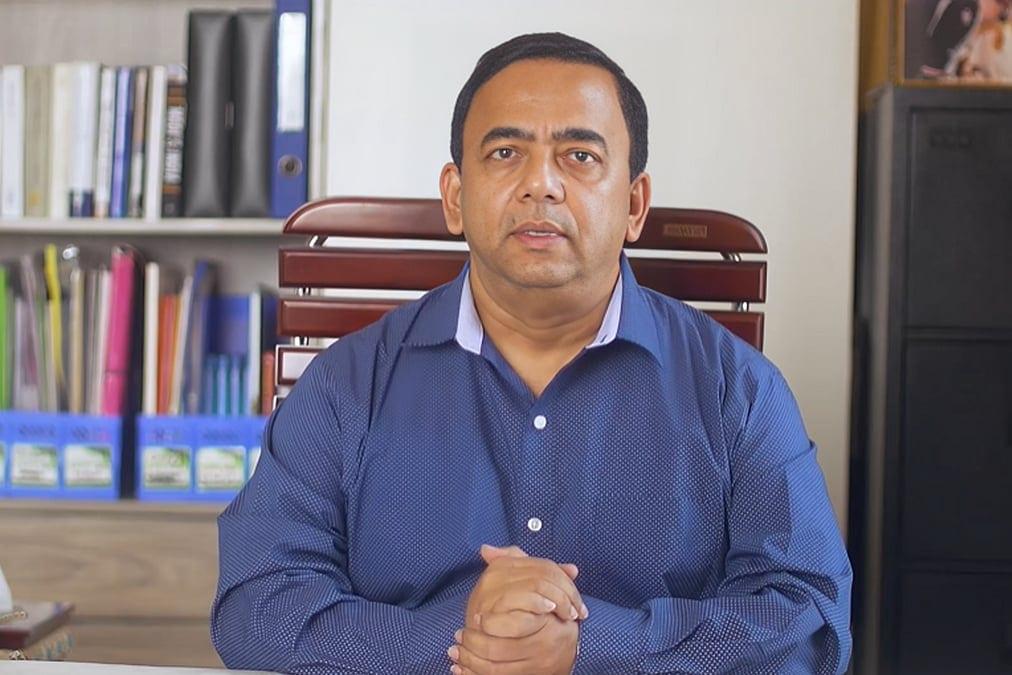
The arrest of former Inspector General of Police (IGP) Benazir Ahmed in Dubai has brought the issue of extraditing influential fugitives from abroad back into focus. Benazir Ahmed was arrested by Dubai police on June 12 based on an Interpol Red Notice issued in a corruption case, as announced by the government. The question now is how quickly he can be brought back to Bangladesh.
Interpol's Red Notice is a request to member countries to identify, locate, and temporarily arrest a fugitive, based on a court warrant or judicial order from the concerned country. The arrest of Benazir Ahmed and the issuance of a Red Notice are significant steps, but the decision to send him back to Bangladesh will be made by the UAE court.
Bangladesh must now prove that the case against Benazir is not politically motivated but a judicial process related to corruption, illegal assets, fraud, money laundering, or similar crimes. It must also demonstrate that he will receive fair justice in Bangladesh.
The process of extraditing Benazir Ahmed involves several steps. Bangladesh must send various documents, including a court warrant, case summary, charge sheet, identity information, crime details, relevant laws, and legal basis for extradition. These documents may need to be translated and certified in a language acceptable to UAE authorities.
Upon receiving the extradition request, UAE authorities will first verify the documents. The case may then go to court, which will check if the crime for which Bangladesh seeks Benazir's return is also a crime under UAE law. This is known as 'dual criminality.' Crimes like corruption, fraud, money laundering, or illegal assets generally have a strong position in this test.
However, the court may consider other factors, such as whether the case is politically motivated, if the accused has already been tried elsewhere for the same offense, if the case or sentence is time-barred, if the accused's fundamental rights may be violated, or if sending him back could result in inhumane treatment or other legal risks.
Legal and diplomatic process experts say the likelihood of Benazir's extradition is higher than that of many other fugitives with Red Notices. This is because he is now in UAE custody, the charges against him are financial crimes and corruption, and there is a court warrant against him. However, his lawyers may raise objections in the UAE court, claiming that the trial in Bangladesh will not be fair, the case is politically motivated, or there are flaws in the charges and process.
Bangladesh's past experiences show that issuing an Interpol Red Notice is one thing, but extraditing a fugitive is another. There are currently 59 Bangladeshis on Interpol's Red Notice list, including top terrorists, murder suspects, fugitives convicted in the Bangabandhu Sheikh Mujibur Rahman murder case, and various other fugitives. However, most of them have not been brought back to the country.
For example, Rabiul Islam, known as Arab Khan, had a Red Notice issued against him in the Mamun Imran Khan murder case. He was in Dubai, but his extradition was complicated because he had an Indian passport. Similarly, top terrorist Jisan Ahmed was arrested in Dubai in 2019, but his extradition was delayed due to uncertainties about his location and the use of Indian and Dominican Republic passports.
In the case of fugitives convicted in the Bangabandhu murder case, Red Notices have not yielded effective results. Nur Chowdhury is said to be in Canada, and Rashed Chowdhury in the United States. Despite Red Notices, they have not been extradited due to diplomatic complexities, legal protections in their countries of residence, concerns about the death penalty, and human rights positions of the concerned countries.
According to police headquarters, Bangladesh has sought Red Notices against at least 25 people in the past year, including Sheikh Hasina, her family members, former ministers, former advisors, businessmen, and various fugitives. However, apart from Benazir Ahmed, no significant Red Notices have been issued against others. This indicates that Interpol does not accept all requests from Bangladesh.
Sources say that the number of Red Notices published on Interpol's website is not the full picture. Interpol does not publish all Red Notices; many are restricted for use by law enforcement agencies. For example, Benazir Ahmed's name is still not on Interpol's Red Notice list on its website.
There are also examples of extradition through Interpol Red Notices. For instance, Interpol issued Red Notices against Arif Sarkar, Mohsin Mia, and Alad Hossain, accused in the Harunur Rashid Khan murder case. Mohsin Mia was extradited with Interpol's assistance last July. This shows that extradition is possible if the concerned country cooperates and the documents are strong.
Now, Bangladesh must act. Benazir Ahmed is not just a fugitive; he was once the police chief of Bangladesh, before that the director-general of RAB, and the commissioner of Dhaka Metropolitan Police (DMP). His extradition would be a significant symbolic success for law enforcement, the Anti-Corruption Commission (ACC), and the government.
However, Bangladesh now has a clear timeframe for extraditing Benazir. An official extradition request must be sent within 30 days of his arrest. Any deficiencies in the documents could weaken Bangladesh's position in the UAE court.
Stakeholders say that simply being satisfied with the Red Notice and arrest news is not enough. The extradition request must demonstrate a strong case. Everything must be accurately presented, including the crime for which he is sought, the relevant Bangladeshi law, the equivalent crime under UAE law, the current status of the legal process, and any court orders against him.
The government must also be active at the diplomatic level. Because extradition is ultimately a legal and diplomatic process. Even if the court finds the documents acceptable, administrative approval, transfer schedules, and arrangements for safe return must be made.