Lakshmi, primarily known as the goddess of wealth, also symbolizes beauty and prosperity in Bengali culture. The ancient Bengali proverb 'বাণিজ্যে বসতে লক্ষ্মী' highlights the historical connection of Lakshmi with commerce and trade. Over time, as societal, political, and anthropological changes occurred, the focus of this proverb has shifted. Today, Lakshmi continues to be a symbol of hope and aspiration for the new generation, representing both wealth and beauty.
Historically, Lakshmi worship was prevalent during the reign of the Sena dynasty in Bengal. During that time, she was worshipped in the form of paddy, symbolizing agricultural abundance. Renowned Bengali historian Niharranjan Ray noted that until the 12th century, Lakshmi worship was not associated with the Sharadiya Kojagori festival. Instead, Lakshmi was worshipped as a symbol of agricultural prosperity and abundance.
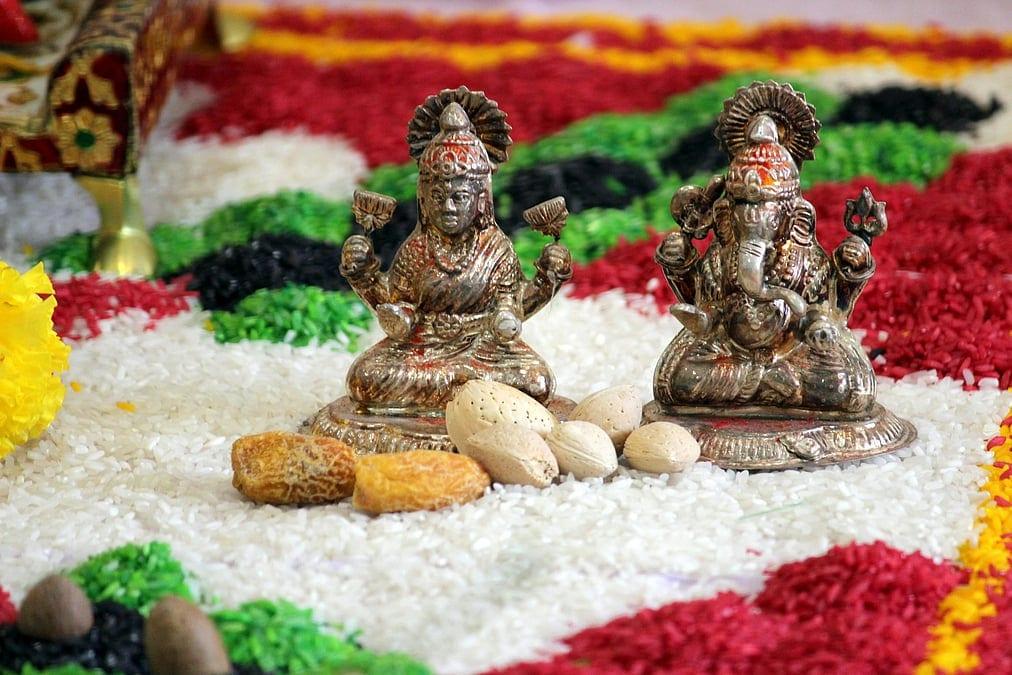
Lakshmi is also a symbol of Shri and Suruchi. Although worshipped as a powerful deity in the Vedic era, she is now primarily revered as the goddess of wealth and beauty. Bengali Hindus have always held Lakshmi in high esteem, worshipping her throughout the year. In Bengali Hindu households, Lakshmi's altar is meticulously maintained, featuring a pot, sindur, wooden or brass fan, necklace, paddy sheaf, and an image of the goddess. Every Thursday, the housewife chants Lakshmi's panchali.
Apart from daily worship, Lakshmi is also venerated during various times of the year. Bhadra Lakshmi Puja is performed on the Thursday of the Shukla Paksha of Bhadra month, Kojagori Lakshmi Puja on the full moon of Ashwin month, and Mahalakshmi worship on the deep-lit Amavasya of Kartik. Similarly, Lakshmi Puja is also conducted during Agrahayan, Paush, and Makar Sankranti. However, the most widespread public celebration is the Kojagori Lakshmi Puja on the full moon of Ashwin.
People from all walks of life participate in this puja. In fact, Lakshmi Puja has a deep connection with the various folk cultures of rural Bengal and is intricately linked with agricultural-based social life. The rituals of Lakshmi Puja include the symbolic representation of paddy, paddy sheaf, and Lakshmi's footprints in the alpana. The puja is usually performed after sunset on the full moon day. In the past, Lakshmi Puja was performed with paddy, kola ber, and Nabapattrika. Idol worship was not prevalent then. Kola ber was made using paddy, turmeric, colocasia, tulsi, and the tip of sugarcane. These were tied together, dressed in new clothes, and placed on the altar for worship.
The term 'Kojagori' is derived from 'Ko jagati', meaning 'Who is awake?'. It signifies that those without wealth wake up in hope, while those with wealth stay awake in fear of losing it. Both groups spend the night awake. According to scriptures, Lakshmi, the goddess of wealth and prosperity, descends from heaven to earth on this Sharad Purnima night. She blesses those whose doors are open to her, but does not enter closed doors. Householders stay awake at night, awaiting the goddess's arrival.
Bengali Hindus, awaiting the blessings of Lakshmi, the goddess of wealth, stay awake at night, performing worship and seeking her blessings. Many believe that Lakshmi descends to earth during this time to bless the land with wealth and prosperity. As the goddess of agricultural wealth, Lakshmi's vehicle, the fan, holds special significance. Paddy is the main crop of Bengal, and paddy sheaf is one of the symbols of Lakshmi. She dislikes the wastage of paddy or other grain foods. Rats cause significant damage to paddy fields or golas. The fan, which feeds on rats, helps protect grain food by destroying rats. Therefore, the presence of the fan as Lakshmi's vehicle is significant.